
Sold out
Springtails (Lobella sp. "Thai Red")
Price range: 25,00€ through 39,50€

Dola larvae (pachnoda)
5,00€
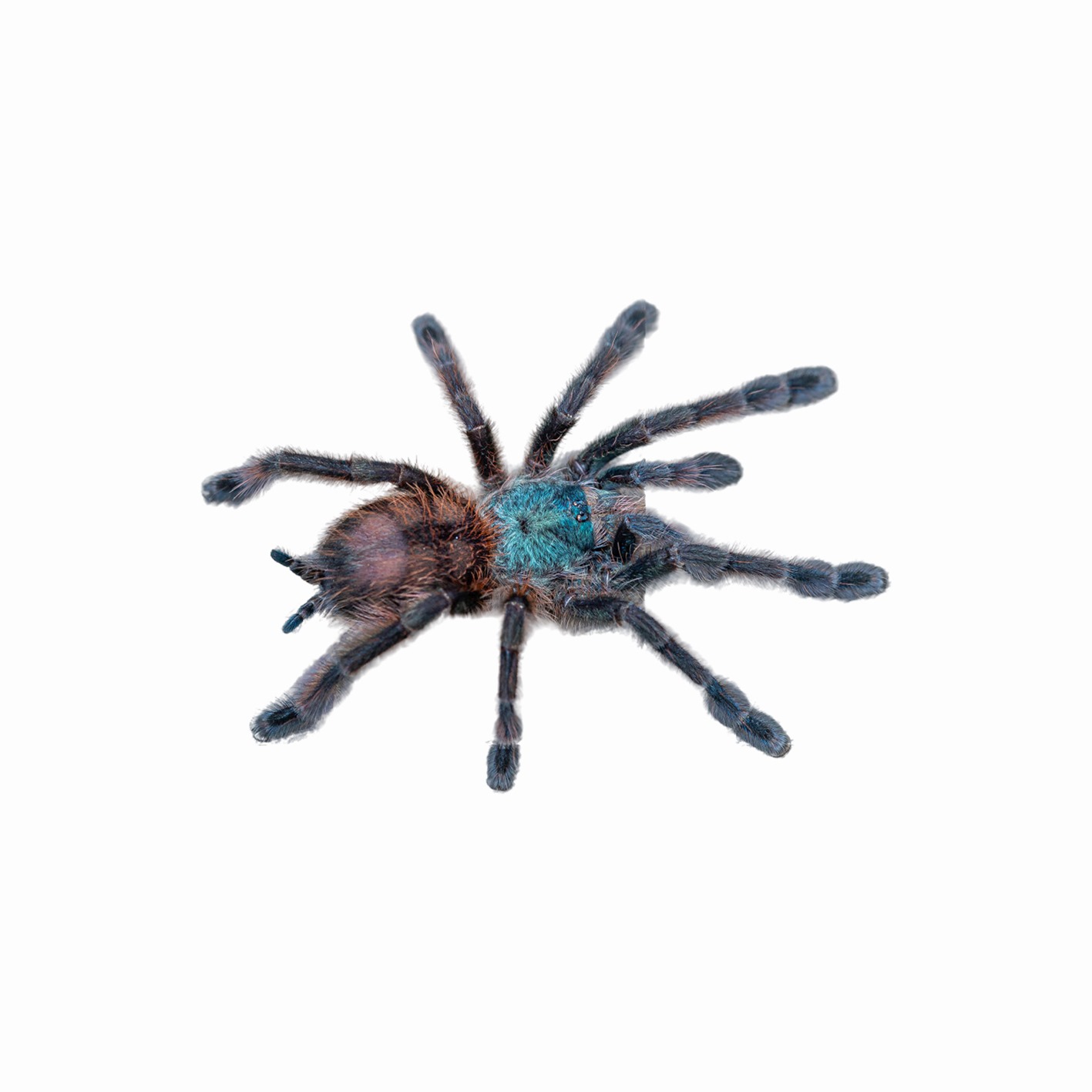
Caribena versicolor
Price range: 26,00€ through 120,00€
Discover the charming Caribbean versicolor tarantula for your terrarium. With its beautiful coloration, it is a perfect addition for any spider fan. We recommend having previous experience with tarantulas or arachnids in general. Bring beauty and fascination to your space with this captivating species.
Description
Species name: Caribena versicolor
Common name: Caribena versicolor tarantula, Martinique tarantula
Taxonomic classification:
- Kingdom: Animalia
- Phylum: Arthropoda
- Class: Arachnida
- Order: Araneae
- Family: Theraphosidae
- Genus: Caribena
Description:
- Size: Caribena versicolor tarantulas are relatively large compared to other tarantula species, with a body span that can reach up to 12 cm.
- Coloration: One of the most distinctive features of this species is its spectacular coloration. Juveniles have a predominantly metallic blue appearance, while adults develop a more varied color pattern including blues, greens, yellows, and reds.
- Morphology: They have a robust body covered in hairs, eight eyes arranged in two rows, and prominent chelicerae (fangs).
Habitat and distribution:
- Natural habitat: Caribena versicolor tarantulas are arboreal spiders and prefer to live in tropical and subtropical forested areas.
- Geographic distribution: They are endemic to the Lesser Antilles, specifically islands such as Martinique, Dominica, Guadeloupe, and Saint Lucia.
Behavior and feeding:
- Behavior: They are generally calm and non-aggressive spiders, although they may display a defensive attitude if they feel threatened.
- Feeding: They are opportunistic predators that primarily feed on insects and other arthropods. They capture their prey using silk to build webs or by ambushing them directly.
Reproduction:
- Sexual dimorphism: Males are typically slimmer and smaller than females. Additionally, they may have spurs on their front legs, which they use during courtship and mating.
- Reproductive cycle: The reproduction of Caribena versicolor tarantulas involves a complex mating ritual, often ending with the female consuming the male after mating.
Additional information
| Options | 6-7 cm (body), Female (3 cm) |
|---|


