
-25% Sold out
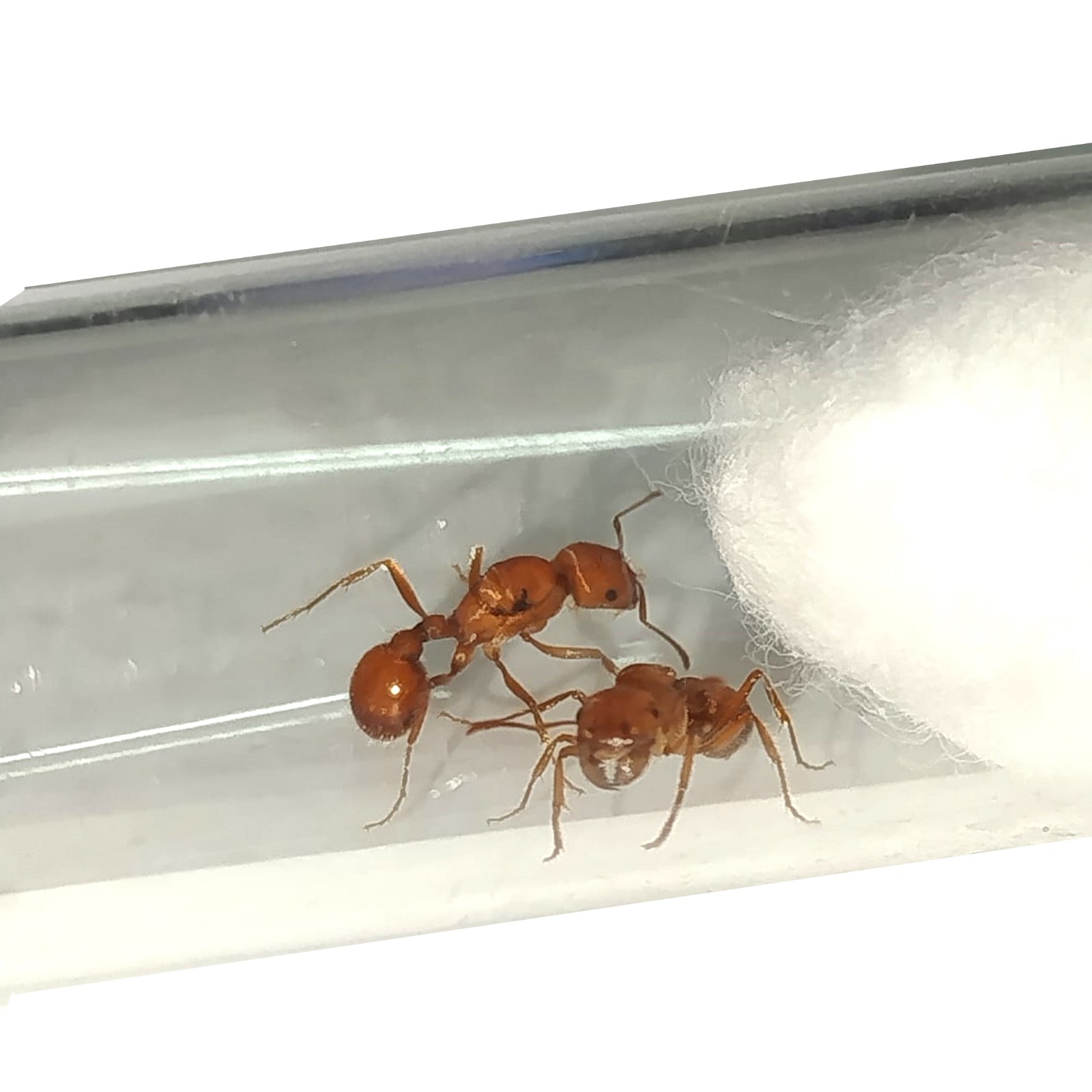
Pogonomyrmex subnitidus
Price range: 44,00€ through 145,00€
Transform your anthill with the Pogonomyrmex subnitidus ant! These active and fascinating ants provide a unique natural spectacle with their complex underground life. Perfect for anthills and terrariums, they add dynamism and interest to any environment!
Description
Scientific Name: Pogonomyrmex subnitidus
Classification:
- Kingdom: Animalia
- Phylum: Arthropoda
- Class: Insecta
- Order: Hymenoptera
- Family: Formicidae
- Subfamily: Myrmicinae
- Genus: Pogonomyrmex
- Species: Pogonomyrmex subnitidus
Description:
- Size: Between 3.5 and 5 mm in length, depending on the caste (worker, queen, male).
- Coloration: Generally dark brown to black. Individuals may exhibit a metallic sheen on their cuticle.
- Structure: Workers have a robust head with strong mandibles. The body is generally compact and features a hairy structure with fine bristles.
Distribution:
- Location: Found mainly in arid and semi-arid regions of North America, especially in the United States and Mexico. Prefers habitats such as deserts and savannas.
Habitat:
- Habitat Type: Prefers sandy or clay soils in areas with sparse vegetation. Common in desert and semi-arid areas.
- Nesting: Builds underground nests with small entrances and extensive tunnels. Colonies can be quite large, with multiple chambers and tunnels.
Behavior:
- Diet: Primarily omnivorous, feeding on seeds, small insects, and other organic materials. Some species also collect nectar.
- Activity: Activity can vary based on temperature and season. In warm climates, they are more active during the cooler parts of the day.
Reproduction:
- Life Cycle: The colony consists of a queen, workers, and males. The queen lays eggs, which develop into larvae, pupae, and finally adults.
- Reproduction Season: Reproduction usually takes place in spring and summer, depending on the climate. Winged queens and males emerge for nuptial flights to reproduce.
Ecology:
- Ecological Role: Like many ants, they play an important role in seed dispersal and pest control by consuming small insects and other organisms.
- Symbiotic Relationships: Can have interactions with other insect species and plants, contributing to the ecosystem’s balance.
Additional information
| Options | Queen, Polygyny 2 queens, Polygyny 3 queens |
|---|
Related products

Sold out
Sold out
Sold out

Sold out

Sold out

-18% Sold out

Sold out


