


Poinsettia (Euphorbia pulcherrima)
4,00€
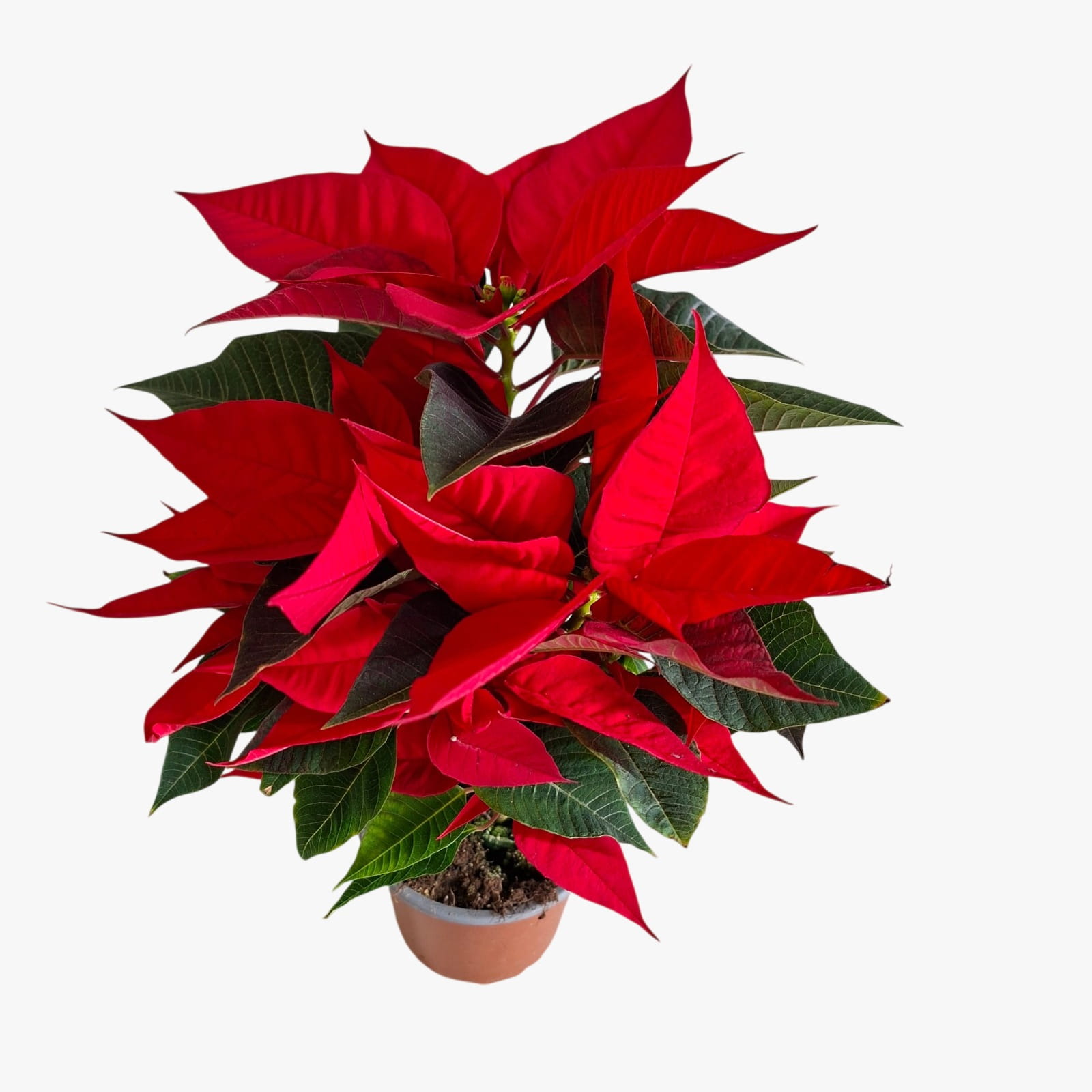
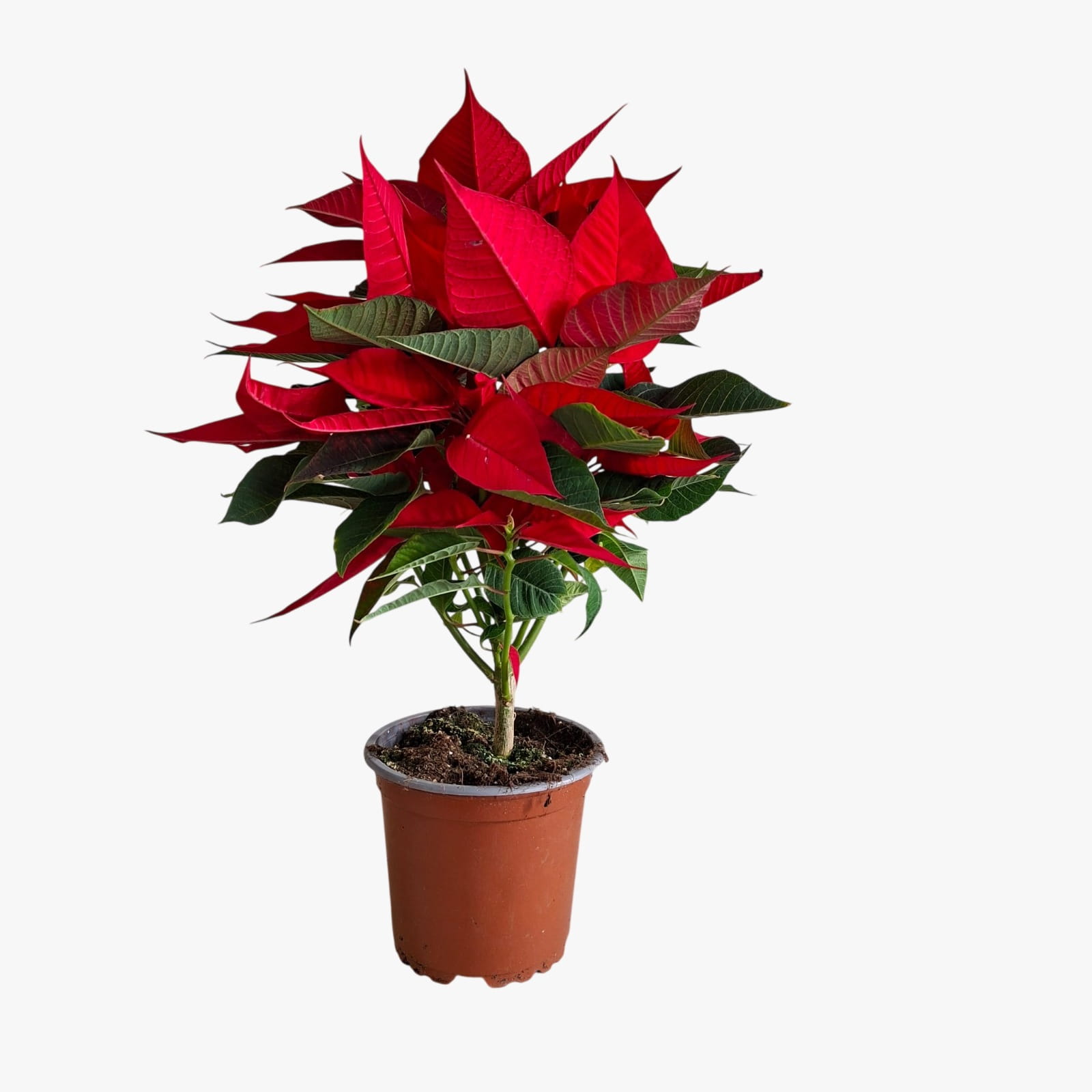
🌺 The Poinsettia (Euphorbia pulcherrima), also known as the Christmas Star, is the classic Christmas plant, loved for its vibrant red bracts. Perfect for adding a festive touch of colour to your home.
– Supplied in an 11 cm pot.
there is stock
The Poinsettia is one of the most recognisable ornamental plants, especially valued for its vibrant colours during the colder months of the year. Native to Mexico and Central America, it belongs to the Euphorbiaceae family and is best known for its striking coloured bracts, most commonly red, although varieties with pink, white, cream and variegated bracts are also available.
Although often mistaken for flowers, its most eye-catching features are actually modified leaves known as bracts. These surround the plant’s small, true flowers, which are found at the centre of each cluster. With the right care, a Poinsettia can be kept throughout the year and encouraged to develop its characteristic colours again.
🌿 Technical specifications
- Common name: Poinsettia, Christmas Star.
- Scientific name: Euphorbia pulcherrima.
- Family: Euphorbiaceae.
- Origin: Mexico and Central America.
- Plant type: Ornamental shrub.
- Life cycle: Perennial.
- Growth habit: Bushy and branching.
- Height: Between 30 cm and 4 m, depending on the variety and growing conditions.
- Bract colours: Red, pink, white, cream and variegated shades.
- Flowering period: Mainly during autumn and winter.
- Flowers: Small, yellowish structures grouped in the centre of the coloured bracts.
- Light requirements: Bright light, preferably indirect.
- Ideal temperature: Between 18 and 22 °C.
- Watering: Moderate.
- Growing medium: Loose, well-aerated and free-draining.
- Growth rate: Moderate.
- Care level: Moderate.
☀️ Light and placement
Poinsettias need plenty of natural light to remain healthy and maintain vigorous foliage. Ideally, place the plant in a bright spot near a window, avoiding prolonged exposure to direct sunlight, particularly during the hottest hours of the day.
Keep it away from draughts, sudden temperature changes and direct heat sources such as radiators and heaters.
💧 Watering and humidity
Water moderately, adjusting the frequency to the temperature and surrounding conditions. Allow the top layer of the growing medium to dry slightly before watering again.
Poinsettias do not tolerate waterlogged soil, as excess moisture can damage the roots and cause leaf drop. If the pot sits in a saucer, remove any excess water after watering.
The plant appreciates moderate humidity, particularly indoors during the heating season.
🌡️ Temperature and growing conditions
Poinsettias are warm-climate plants that grow best in stable temperatures. An ideal temperature range is approximately 18–22 °C.
Avoid temperatures below 12–15 °C, as well as frost, which can seriously damage the leaves and stems.
Sudden temperature fluctuations can also lead to premature leaf drop.
🪴 Growing medium and repotting
Poinsettias need a light, fertile growing medium with good drainage. A general-purpose potting mix for indoor ornamental plants can work well, provided it allows excess water to drain away without becoming compacted.
Repotting is best carried out in spring, when the plant begins a new period of growth. Choose a pot with drainage holes, only slightly larger than the previous one.
🌱 Feeding and maintenance
During spring and summer, when the plant is actively growing, a balanced fertiliser for foliage or flowering plants can be applied according to the manufacturer’s instructions.
Reduce or stop feeding during the flowering and resting periods.
To maintain a compact shape and encourage new growth, light pruning can be carried out in early spring. Remove any dry or damaged leaves as needed.
🌺 How to make your Poinsettia turn red again
The characteristic colour of Poinsettia bracts is mainly controlled by photoperiod, which refers to the length of daylight and darkness the plant receives.
To encourage the development of coloured bracts, the plant needs several weeks of short days and long, uninterrupted nights. As a general guide, provide around 14 hours of complete darkness every day for approximately 8–10 weeks.
Even artificial light during the night can interfere with this process. Under suitable conditions, the plant can develop its characteristic colours again during the following autumn and winter.
🌿 Propagation
Poinsettias can be propagated from stem cuttings, preferably during spring or summer.
Select healthy sections of stem from a mature plant and place them in a light growing medium. Maintain moderate moisture while the cuttings develop roots.
When the stems are cut, they release a characteristic white milky sap. Wear gloves when handling the cuttings and avoid contact with the eyes and mucous membranes.
⚠️ Precautions
Euphorbia pulcherrima produces a white milky sap that may cause skin and eye irritation in sensitive individuals. If ingested, it can cause digestive discomfort.
Keep the plant out of reach of young children and pets, and avoid direct contact with its sap.
🌱 Interesting facts
- Its scientific name, Euphorbia pulcherrima, refers to its beauty: pulcherrima means “the most beautiful”.
- The red, pink or white parts are not petals but modified leaves called bracts.
- Its true flowers are small and grouped in structures known as cyathia.
- In its natural habitat, it can grow into a shrub several metres tall.
- The colour of its bracts is closely linked to seasonal changes in day length and darkness.
Related products
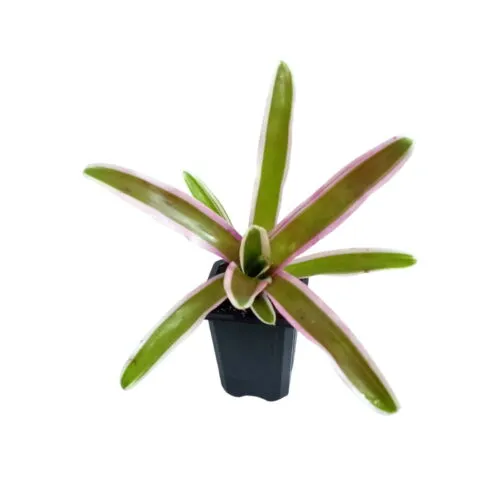
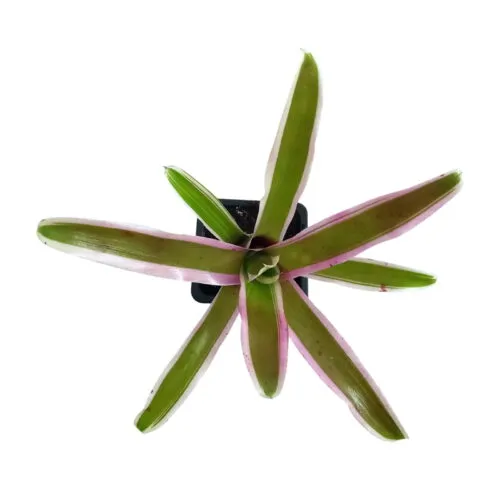
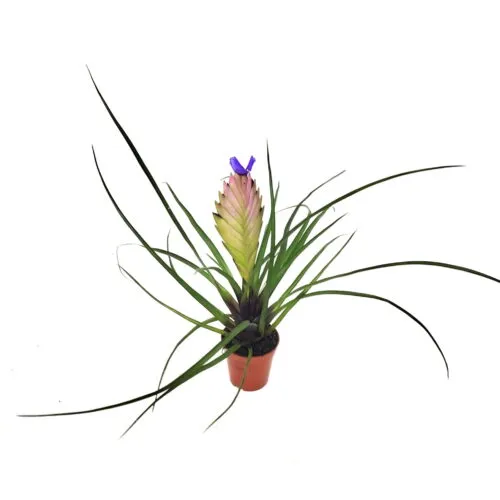
Tillandsia cyanea ‘Anita’ (Pink Feather Bromeliad)
Discover Tillandsia cyanea 'Anita' (Pink Feather Bromeliad), a gem of nature that will beautify your home. With its striking pink bracts and blue flowers, it is perfect for decorating interiors and terrariums. Easy to care for and adding a vibrant touch to any space. Make it a part of your home!
Features:
- Pot: 8.5 cm.
- Indoor.