Sold out
Back to products

IsoSnack: Nutritious Food for Isopods
Price range: 3,50€ through 14,90€
Armadillidium vulgare “Orange”
Price range: 1,80€ through 16,00€
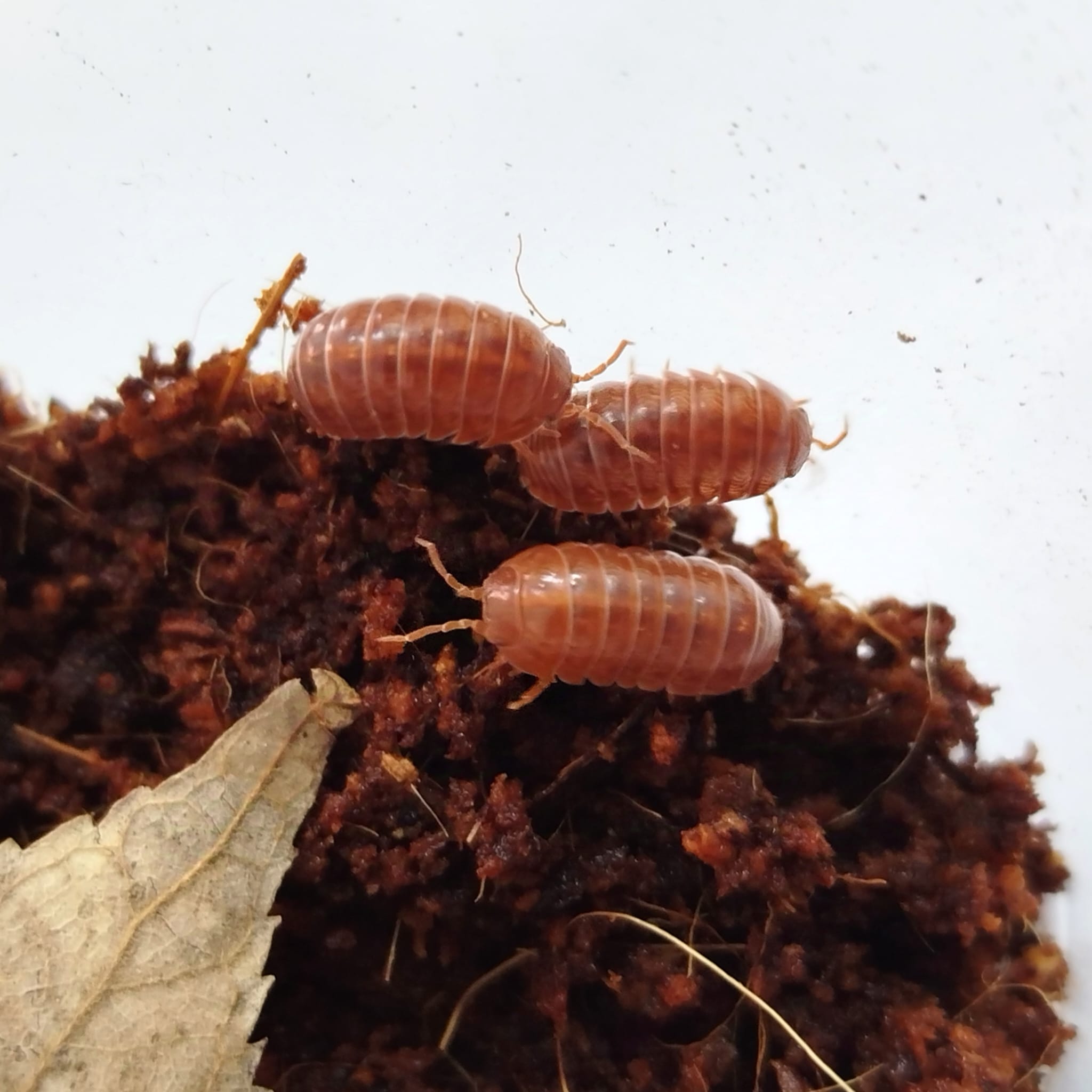
Bring your terrarium to life with the Armadillidium vulgare Orange! 🧡 This isopod stands out with its vibrant color and natural cleaning role. Easy to care for, perfect for bioactives, and a must-have for terrarium enthusiasts. Add a unique touch to your space! 🌟
Description
Technical Sheet: Armadillidium vulgare Orange
General Description
Armadillidium vulgare Orange is a variety of woodlouse distinguished by its vibrant orange coloration, making it stand out among other species. It belongs to the Armadillidiidae family and is highly valued in terrariums for its resilience, ease of care, and aesthetic appeal.
Main Characteristics
- Common Name: Orange pill bug, Orange woodlouse
- Scientific Name: Armadillidium vulgare Orange
- Size: 8-18 mm when fully grown
- Coloration: Bright orange tone with slight variations depending on environmental conditions
- Body Shape: Oval and convex, capable of rolling into a ball as a defense mechanism
Habitat and Ideal Conditions
- Temperature: 18-24 °C (64-75 °F)
- Humidity: 60-80%, with a substrate that retains some moisture but avoids waterlogging
- Substrate: Coco fiber, soil rich in organic matter, or a mix of peat and dry leaves
- Hiding Places: Provide wood, bark, or natural shelters for hiding
Diet
- Naturally detritivorous, feeding on decomposing organic matter
- Can be supplemented with vegetables such as zucchini, carrot, and dried leaves
- Add calcium (e.g., crushed eggshell) to support exoskeleton development
Behavior
- Sociability: Gregarious animals that thrive in colonies
- Activity: Mostly nocturnal, though they may be active during the day in low-light conditions
- Reproduction: Easy to breed in captivity; females can carry up to 100 offspring in their brood pouch
Use in Terrariums
- Help control mold and food waste, acting as a cleaning crew
- Ideal for bioactive terrariums, paludariums, or as decorative elements in isopod collections due to their striking coloration
Warnings
- Non-toxic to other species, but avoid housing them with predators in confined spaces
- Maintain a balance between humidity and ventilation to prevent harmful mold growth
Additional information
| Options | 1 unit, 10 units |
|---|
Related products
Sold out

Sold out
Sold out
Sold out
Sold out
Sold out