

Orchesella cincta
Price range: 15,00€ through 20,00€
Orchesella cincta is a terrestrial springtail from the family Entomobryidae, recognised by its elongated body, long antennae and distinctive banded colouring. Larger than many commonly kept springtails, it is an interesting species to observe in cultures and terrariums.
🔎 Orchesella cincta – Characteristics
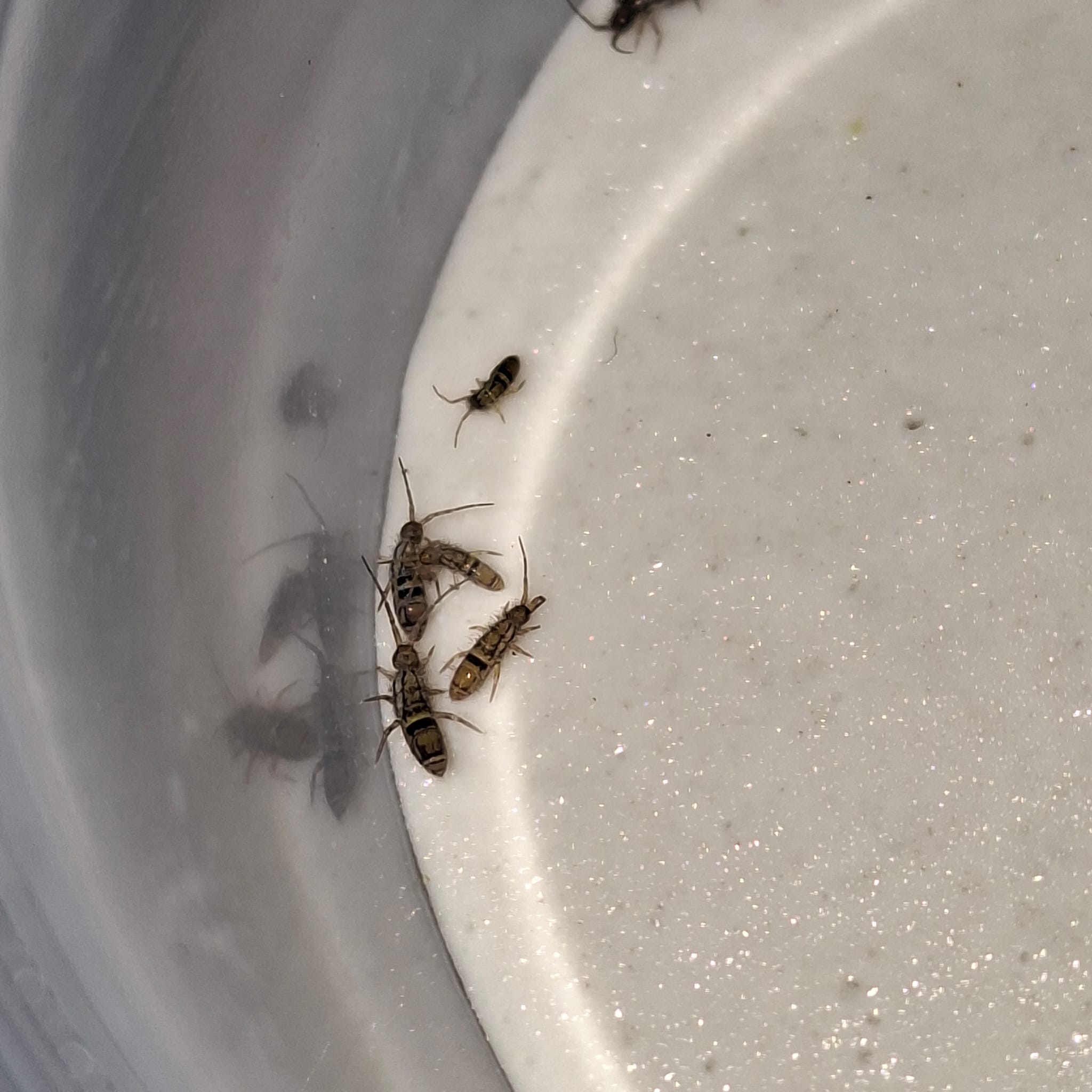
Orchesella cincta has a slender, elongated body with clearly defined segments and long antennae that it uses to explore its surroundings. Its colouring can vary, with darker pigmented areas and lighter bands that help identify the species.
One of its most distinctive features is the furcula, a forked appendage located underneath the abdomen that acts as a jumping mechanism. When disturbed or threatened, it can use this structure to propel itself rapidly through the environment.
- Scientific name: Orchesella cincta
- Common name: Banded springtail
- Family: Entomobryidae
- Order: Entomobryomorpha
- Class: Collembola
- Size: Approximately 4 mm in adults.
- Animal type: Hexapod arthropod
- Diet: Decaying organic matter and microorganisms associated with the substrate.
- Reproduction: Sexual.
🌿 Habitat and behaviour
In the wild, Orchesella cincta inhabits a variety of terrestrial environments. It can be found among fallen leaves, beneath stones, on tree bark and in areas where organic matter accumulates.
It spends much of its time moving across the surface of the substrate, exploring its surroundings in search of food. It is an active and fast-moving species, making it particularly interesting to observe.
Its presence is associated with natural decomposition processes, contributing to the ecological dynamics of soil and leaf litter.
🍄 Feeding
Orchesella cincta feeds primarily on organic resources found in its environment. Its diet includes microorganisms and organic matter, particularly those associated with decomposition.
In captivity, suitable springtail food, small amounts of dried yeast and other appropriate organic food sources can be offered.
Avoid overfeeding, as uneaten food can encourage mould growth and negatively affect the conditions inside the culture container.
🏡 Care and maintenance
To keep Orchesella cincta in good condition, use a well-ventilated container with a substrate that retains some moisture without becoming waterlogged.
Leaf litter, small pieces of bark and other natural materials provide hiding places and additional surfaces for the springtails to explore and feed on.
It is advisable to maintain different moisture levels within the enclosure, avoiding both complete dryness and excessive water accumulation. Adequate airflow also helps maintain suitable conditions.
General care recommendations:
- Use a natural substrate containing organic matter.
- Add dried leaves and small pieces of bark.
- Maintain moderate moisture, with some slightly damper areas.
- Ensure adequate ventilation.
- Avoid waterlogging and excessive food waste.
- Check the condition of the culture regularly.
🥚 Reproduction and life cycle
Orchesella cincta reproduces sexually. Females lay eggs in the substrate, from which young springtails hatch and gradually develop through successive moults.
One interesting characteristic of springtails is that they continue moulting even after reaching sexual maturity, which distinguishes them from many other arthropods.
Colony development depends on several factors, including food availability, temperature, humidity and the overall conditions of the culture.
🌱 Springtails in bioactive terrariums
Springtails play an important role in terrestrial ecosystems. They contribute to the decomposition of organic matter and are involved in the interactions between microorganisms and other soil-dwelling organisms.
In terrariums, they can help process small organic residues and contribute to the natural balance of the substrate. However, their ability to help manage mould and waste depends on the conditions of the enclosure and does not replace regular cleaning and maintenance.
Orchesella cincta is particularly interesting for keepers who want to observe a larger springtail species and explore the diversity of these small inhabitants of the soil.
🪱 Uses
Orchesella cincta can be used as live food for small predatory arthropods capable of catching and consuming it. It can also be introduced into suitable bioactive terrariums, where it contributes to the breakdown of organic matter and feeds on fungi, algae and microorganisms found in the substrate.
Its relatively large size, distinctive appearance and active behaviour also make it an interesting species for observation and springtail culture.
| Options | 25 units, 50 units |
|---|