
Tenebrio molitor
Price range: 1,25€ through 10,00€
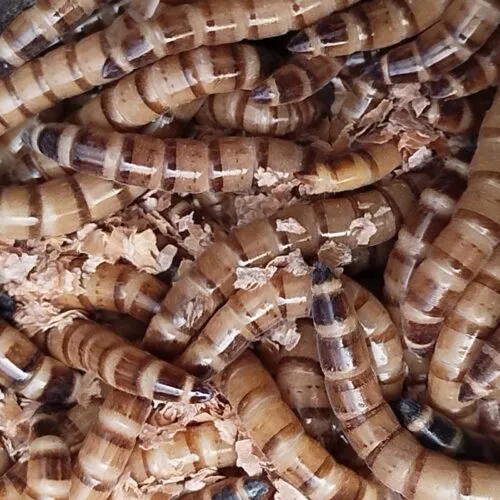
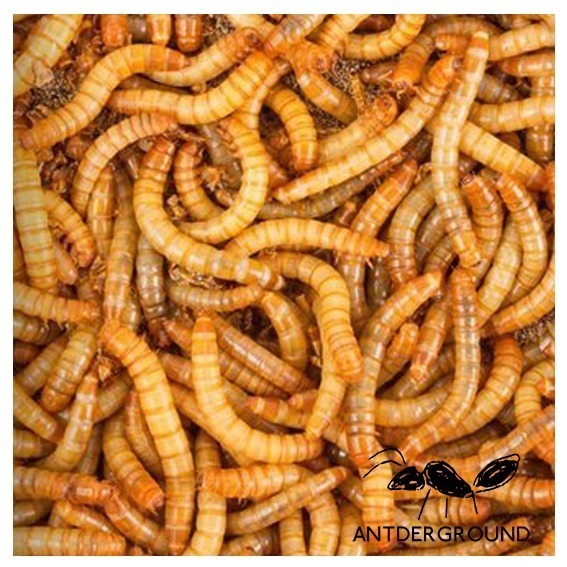
25|100|500 Grams of tenebrio molitor (known as mealworms), a perfect live food for exotic animals and especially for certain species of ants
25 | 100 | 500 grams of Tenebrio molitor
Technical Sheet: Mealworm (Tenebrio molitor)
Classification:
- Kingdom: Animalia
- Phylum: Arthropoda
- Class: Insecta
- Order: Coleoptera
- Family: Tenebrionidae
- Genus: Tenebrio
- Species: Tenebrio molitor
Description:
- Length: 1.5 to 2.5 centimeters.
- Color: Dark brown.
- Morphology: Body divided into head, thorax, and abdomen. Possesses six legs, antennas, and developed mandibles.
Life Cycle:
- Egg: The cycle begins with the female laying eggs.
- Larva: The larva, commonly known as the mealworm, is the most active growth phase and feeds on protein-rich materials.
- Pupa: The larva transforms into a pupa, where metamorphosis occurs.
- Adult: The pupa develops into an adult beetle.
Habitat:
- Mealworms are adaptive and are found in dark and warm environments, such as warehouses, barns, and food storage areas.
Feeding:
- The larval phase feeds on protein-rich materials, such as flour, grains, and other organic products. Adults primarily consume fibrous foods.
Economic Importance:
- Used as food for exotic animals, reptiles, birds, and fish due to their high protein content and nutritional value.
Environmental Benefits:
- Decompose organic materials, contributing to the decomposition and recycling process in nature.
| Options | 25 grams, 100 grams, 500 grams |
|---|
Related products
IsoSnack: Nutritious Food for Isopods
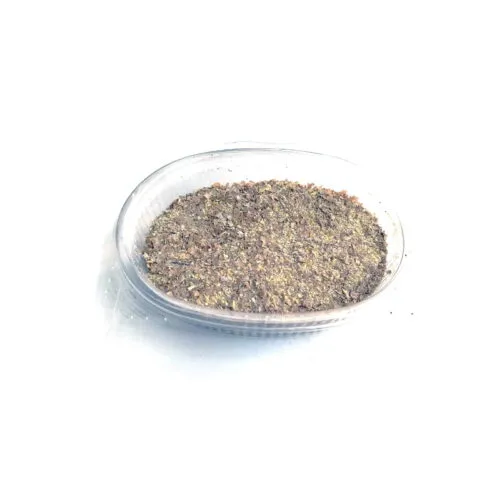
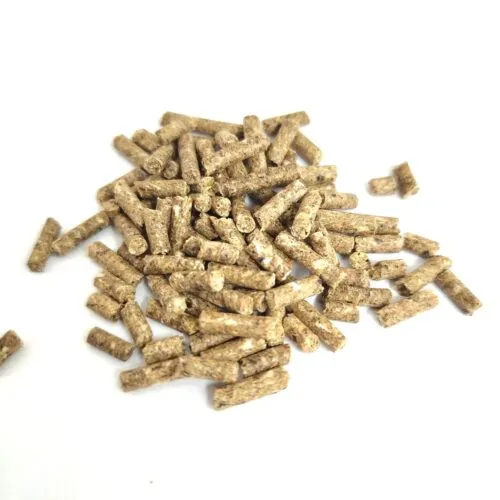
Fantastic food for isopods, ideal as a supplement to their diet. Presented in a practical pellet format that makes it easy to consume and ensures balanced nutrition.
Information:
- Mix it with other natural foods such as dry leaves, decaying wood and fresh fruits or vegetables. Do not use it as the only food, since isopods need diversity to obtain other nutrients and microorganisms that are not present in this product.
- Combine it with an environment rich in natural substrate so that they obtain a full spectrum of nutrients.
Composition:
Crude protein 20%, Crude fiber 18%, crude oils and fats 2%, crude ash 9%, calcium 4%, phosphorus 0.5%, sodium 0.2%.
Recommendation: Offer this food in small quantities.
Warning: Not suitable for human consumption. This food is intended for and is for isopods.