
Gromphadorhina portentosa
Price range: 1,50€ through 12,00€
Discover the fascinating Madagascar hissing cockroach! Perfect as an exotic pet or for research projects. Its peculiarity and ease of care make it a unique choice. Dare to explore the world of these incredible creatures!
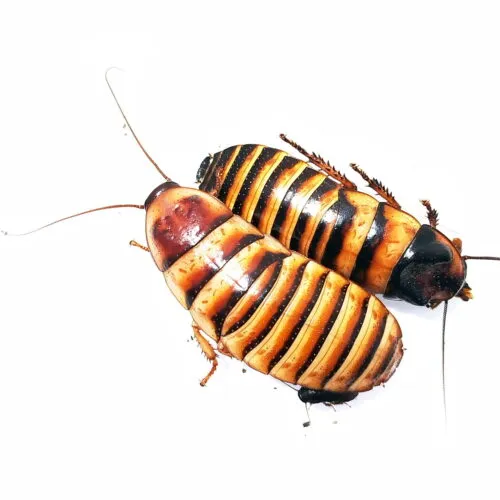
The Madagascar hissing cockroach (Gromphadorhina portentosa) is a fascinating insect that has captured the attention of many people due to its impressive size and unique appearance.
Technical sheet of Gromphadorhina portentosa
Scientific Name: Gromphadorhina portentosa
Common Name: Madagascar hissing cockroach
Taxonomic Classification:
- Kingdom: Animalia
- Phylum: Arthropoda
- Class: Insecta
- Order: Blattodea
- Family: Blaberidae
- Genus: Gromphadorhina
Distribution and Habitat: This species is endemic to Madagascar, meaning it is exclusively found on this island. In Madagascar, it can be found in a variety of habitats, ranging from tropical forests to drier areas.
Description:
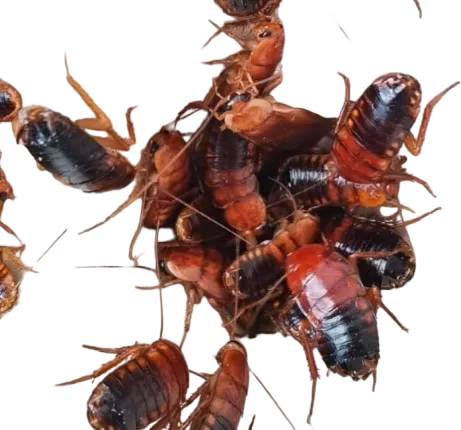
- Size: Madagascar hissing cockroaches are, as their name suggests, large compared to other cockroaches. Adults can measure between 5 and 7 centimeters in length.
- Color: They have a dark brown or black color, with a sturdy and often glossy exoskeleton.
- Morphology: Their body is divided into three distinct sections: head, thorax, and abdomen.
Behavior and Diet: Madagascar hissing cockroaches are primarily nocturnal and feed on a variety of decomposing organic matter, such as fruits, vegetables, and decaying plant material. They are omnivorous and can consume a wide range of foods. In their natural habitat, they play an important role in the decomposition of organic matter, thus aiding in the ecosystem’s nutrient cycle.
Interactions with Humans: These cockroaches have become popular as exotic pets due to their interesting appearance and relative ease of care in captivity. Additionally, they are used in scientific research in fields such as ecology, physiology, and genetics.
| Options | 1 unit, 10 units |
|---|