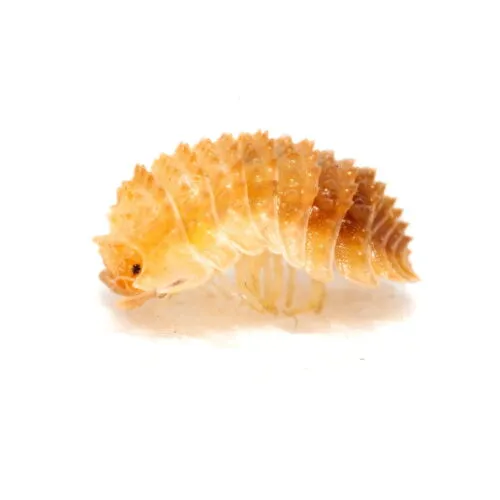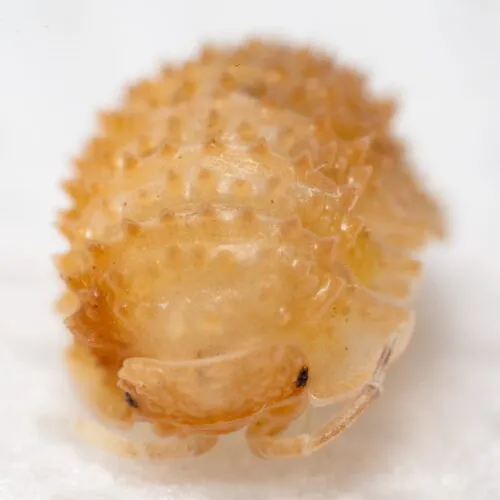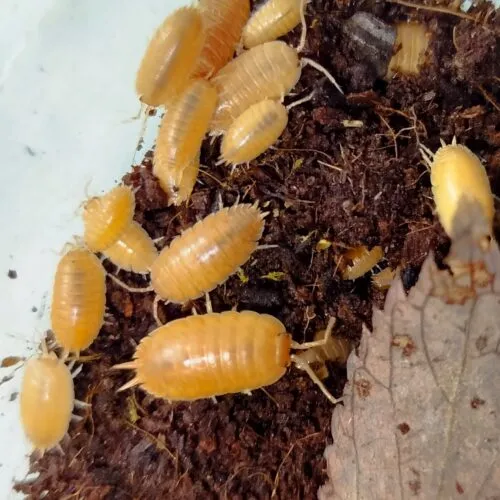
Armadillidium granulatum
Price range: 0,50€ through 4,00€
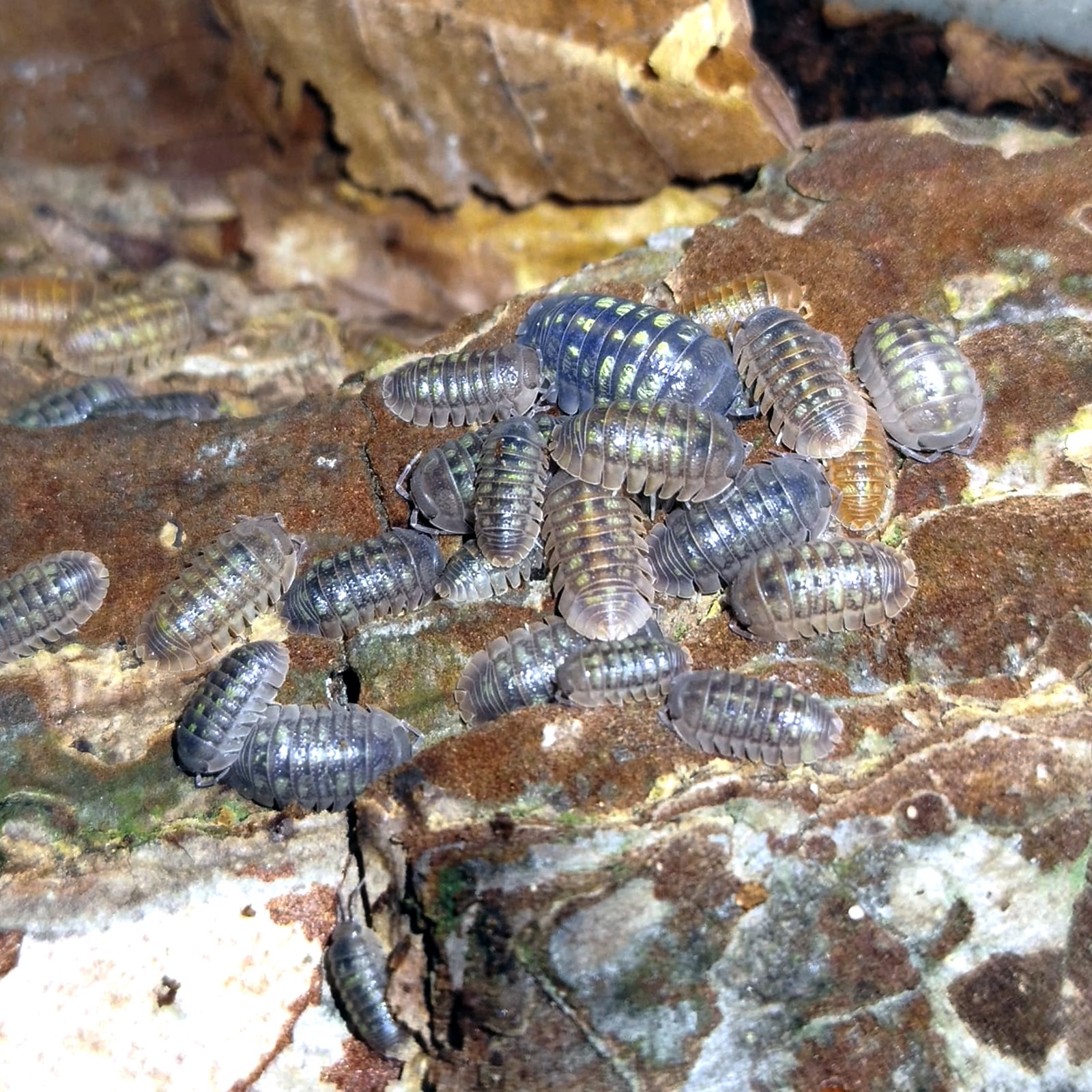
Armadillidium granulatum stands out for its rough exoskeleton, optimized for greater resistance. Its ability to efficiently decompose organic matter makes it a key ally in maintaining a balanced and clean ecosystem. Improve your terrarium with this species of granular and resistant isopod!
Technical data sheet of the isopod armadillidium granulatum
Scientific Name: Armadillidium granulatum
Family: Armadillidiidae
Class: Malacostraca
Order: Isopoda
Suborder: Oniscidea
Kingdom: Animalia
Phylum: Arthropoda
General description:
The Armadillidium granulatum is a terrestrial isopod known for its ability to roll completely into a ball when threatened, a behavior called “conglobation.” This species is characterized by its rough and granular shell, hence the name “granulatum.”
Physical characteristics:
- Size: Between 8 to 12 mm in length.
- Color: Varies from pale gray to brown, with a rough texture on the surface of the exoskeleton.
- Exoskeleton: Calcified and segmented, with a pattern of small bumps or “granules.”
- Number of Legs: 7 pairs of legs.
- Antennae: Two pairs, with one being the primary and more visible pair.
Distribution:
Armadillidium granulatum is widely distributed in Europe, mainly in Mediterranean and temperate regions. It can be found in humid habitats, such as under rocks, fallen leaves, and logs, but also in drier environments.
Habitat:
Prefers dark and moist places, although this species can tolerate drier environments compared to other isopods. They typically inhabit soils rich in organic matter, where they feed on plant debris.
Diet:
They are detritivores, feeding mainly on decomposing organic matter such as dead leaves, wood, and other plant residues.
Reproduction:
- Reproductive cycle: Armadillidium granulatum is ovoviviparous. Females carry the eggs in a special pouch under their abdomen called a marsupium until they hatch.
- Offspring: After hatching, juveniles remain in the marsupium for a few days before emerging fully.
Behavior:
- Defense: When threatened, their primary defense mechanism is to roll completely into a ball, protecting their soft parts inside the hard shell.
- Activity: They are mostly nocturnal and tend to avoid direct light. They prefer humid and dark areas during the day and move more actively at night.
| Options | 1 unit, 10 units |
|---|
Related products