-40%
Camponotus chilensis
Original price was: 75,00€.45,00€Current price is: 45,00€.

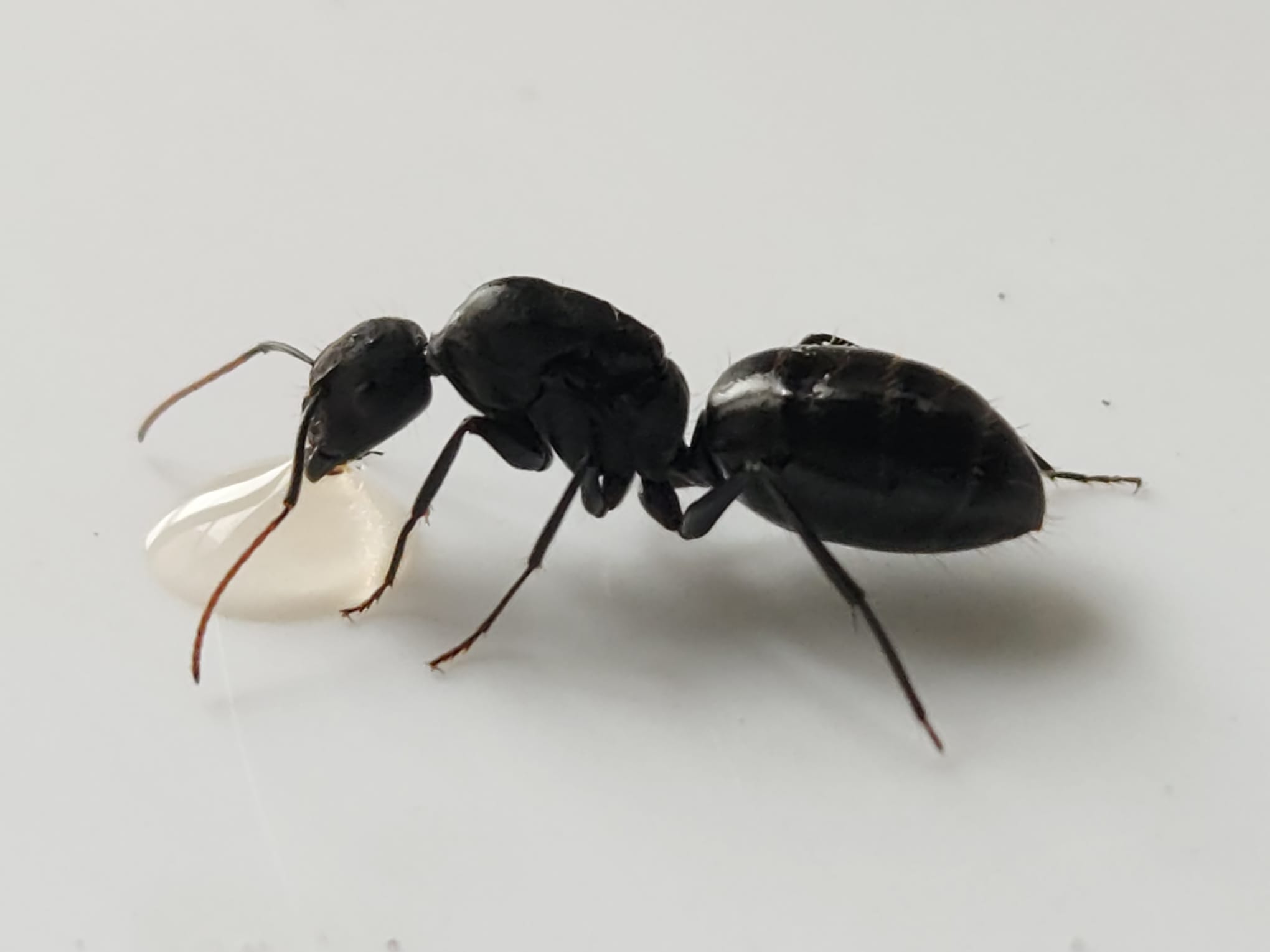
Camponotus morosus
Original price was: 75,00€.45,00€Current price is: 45,00€.
Camponotus morosus stands out for its size and striking dark coloration. Perfect for hobbyists to observe the colony’s organization and daily activity. 🐜🌿
Description
Technical Sheet – Camponotus morosus
Note: Information about Camponotus morosus is limited due to scarce documentation; the data presented are indicative and based on related species of the same genus.
Taxonomy
- Scientific name: Camponotus morosus
- Genus: Camponotus
- Family: Formicidae
- Subfamily: Formicinae
- Distribution: South America (mainly Andean regions and warm, humid areas).
Morphology
- Size:
- Queen: 12–15 mm
- Minor workers: 4–7 mm
- Major workers: 8–10 mm
- Coloration: Dark shades from brown to black, moderately shiny.
- Distinctive traits: Robust body typical of Camponotus, broad heads in major workers, strong mandibles, and long antennae.
Behavior
- Type: Semi-nesting species; prefers decayed wood, cracks, or narrow spaces.
- Activity: Active in the late afternoon and night (crepuscular/nocturnal).
- Foraging: Slow but steady; workers explore individually.
Diet
- Feed on sugary liquids (sugar water, honey, artificial nectar) and proteins (small insects, chopped crickets, flies, etc.).
- Prefer soft and sweet foods.
Humidity and Temperature
- Ideal temperature: 22–26 °C
- Nest humidity: 50–70%
- Foraging area humidity: 40–60%
- Hibernation/diapause: Not strictly required; a slight drop to 18–20 °C in winter is beneficial.
Maintenance Level
- Level: Easy – Intermediate
- Colonies are manageable but grow slowly; prefer stable humidity.
- Require spacious nests for major workers.
Colony Growth
- Speed: Slow
- Maximum colony size: 1,000–3,000 individuals
- Time to first workers: 6–8 weeks from egg laying
Recommended Nest Type
- Acrylic or plaster nests with controlled humidity.
- Alternative: Treated wood to simulate natural habitat.
- Wide passages to accommodate major workers.
- Spacious and ventilated foraging area.
Additional information
| Options | Queen |
|---|