

Cubaris jupiter
Price range: 15,00€ through 100,00€
Discover the fascinating world of isopods with the Cubaris jupiter! From their vibrant colors to their important role in the ecosystem, these little creatures are a unique and fascinating addition to your terrarium. Make your space come alive with their presence! 🌿✨
Technical Sheet: Cubaris jupiter
Scientific Name: Cubaris jupiter
Taxonomic Classification:
- Kingdom: Animalia
- Phylum: Arthropoda
- Subphylum: Crustacea
- Class: Malacostraca
- Order: Isopoda
- Family: Porcellionidae
- Genus: Cubaris
Geographical Distribution: Cubaris jupiter is endemic to certain geographical areas, mainly found in tropical and subtropical regions.
Natural Habitat: This isopod is known to inhabit humid and dark environments, such as the soil of tropical and subtropical forests, as well as caves and underground areas.
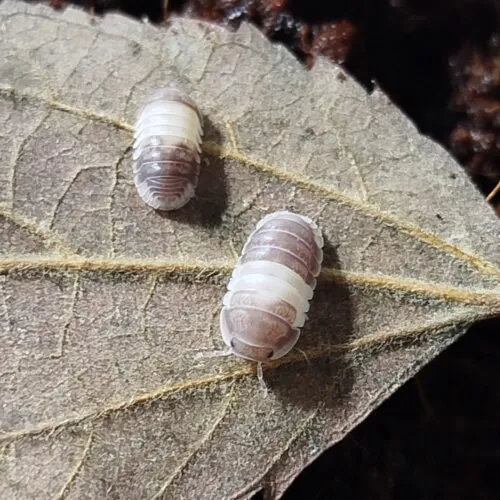
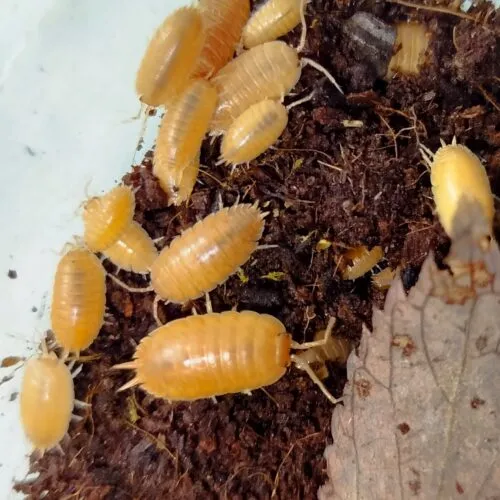
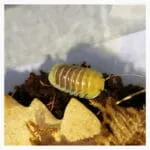
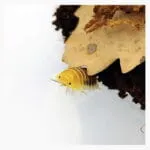
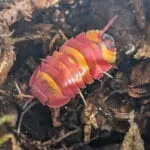
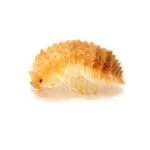
Morphological Description: Cubaris jupiter is a variable-sized isopod, with a length ranging from 5 mm to approximately 22 mm. Its body is protected by a segmented shell, which may have a primary yellow color with a brown or darker zone in some parts. It has seven pairs of legs, short antennae, and compound eyes.
Behavior and Feeding: These isopods are primarily detritivores, feeding on decaying organic matter and other plant or animal remains. They are nocturnal and spend most of their time hidden under leaf litter, decaying wood, or other substrates.
Reproduction: Cubaris jupiter is ovoviviparous, meaning that offspring develop inside the female and are born as young forms similar to adults. Reproduction can occur continuously under suitable habitat and feeding conditions.
Ecological Importance: These isopods play a crucial role in decomposing organic matter in the ecosystems they inhabit. They contribute to the nutrient cycle by decomposing dead organic matter and releasing nutrients that can be absorbed by plants.
| Opciones | 1 unidad, 10 unidades |
|---|