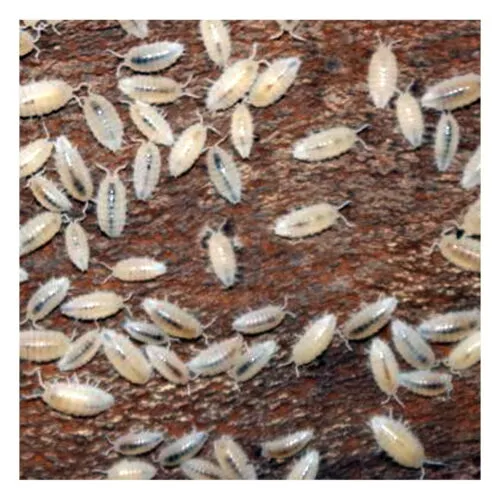

Porcellio laevis dairy cow
2,50€
Discover beauty in miniature! Purchase your own Porcellio laevis Dairy Cow and add a unique touch to your terrarium. Bring your environment to life with these fascinating isopods! 🐄
Scientific Name: Porcellio laevis “Dairy Cow”
Common Name: Dairy Cow Isopod
Taxonomic Classification:
- Kingdom: Animalia
- Phylum: Arthropoda
- Subphylum: Crustacea
- Class: Malacostraca
- Order: Isopoda
- Family: Porcellionidae
- Genus: Porcellio
- Species: P. laevis
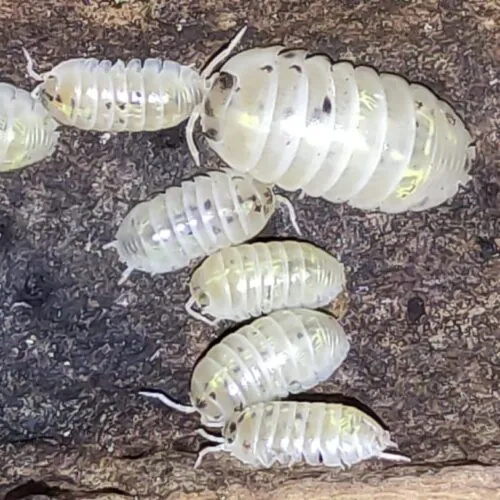
Description: The Dairy Cow isopod, a variant of Porcellio laevis, is known for its distinctive coloration resembling that of a dairy cow. These small terrestrial crustaceans are commonly kept in captivity as pets or used in scientific experiments due to their easy care and interesting behavior.
Morphological Characteristics:
- Size: Dairy Cow isopods typically measure between 1-2 centimeters in length, though sizes may vary.
- Coloration: They exhibit a black and white color pattern reminiscent of a dairy cow, with well-defined spots or stripes.
- Body: Their body is segmented and protected by a hard exoskeleton.
- Antennae: They possess a pair of short antennae on the front of their head.
- Legs: They have seven pairs of legs used for locomotion.
Habitat and Distribution: Dairy Cow isopods are native to Europe but due to their ability to adapt to different environmental conditions, they are now found in many parts of the world. They prefer moist, dark habitats such as under logs, rocks, or in decaying plant matter.
Behavior and Feeding: These isopods are detritivores, primarily feeding on decaying organic matter such as fallen leaves, rotting wood, and animal remains. They are nocturnal creatures, spending most of their time foraging for food and shelter. They play a vital role in ecosystems by aiding in the decomposition and recycling of organic matter.
Reproduction: Reproduction in Dairy Cow isopods follows a common life cycle for terrestrial isopods. Females lay fertilized eggs that are incubated in a specialized pouch called a marsupium. After an incubation period, young isopods hatch and go through several developmental stages before reaching sexual maturity.
Importance: These isopods have ecological importance as decomposers in ecosystems, assisting in the nutrient recycling process. Additionally, they are used in scientific research due to their ease of handling and ability to regenerate lost limbs.
Care in Captivity: For captive care, it’s essential to provide them with a suitable environment with moist substrate and hiding places. A balanced diet including decaying organic matter such as fallen leaves or commercial isopod food should be provided. Maintaining proper humidity and temperature is also crucial for their well-being.
| Options | 10 units |
|---|
Related products