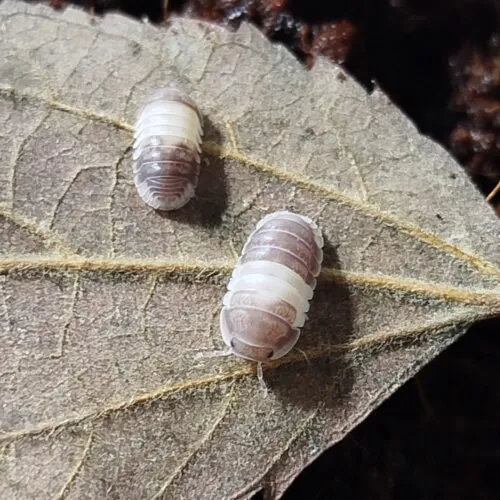
Cubaris murina “Papaya”
2,50€
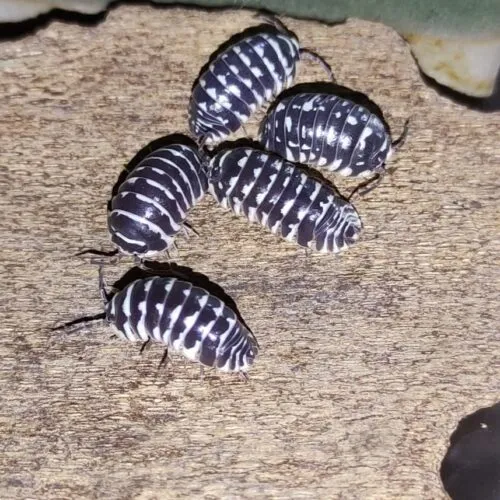
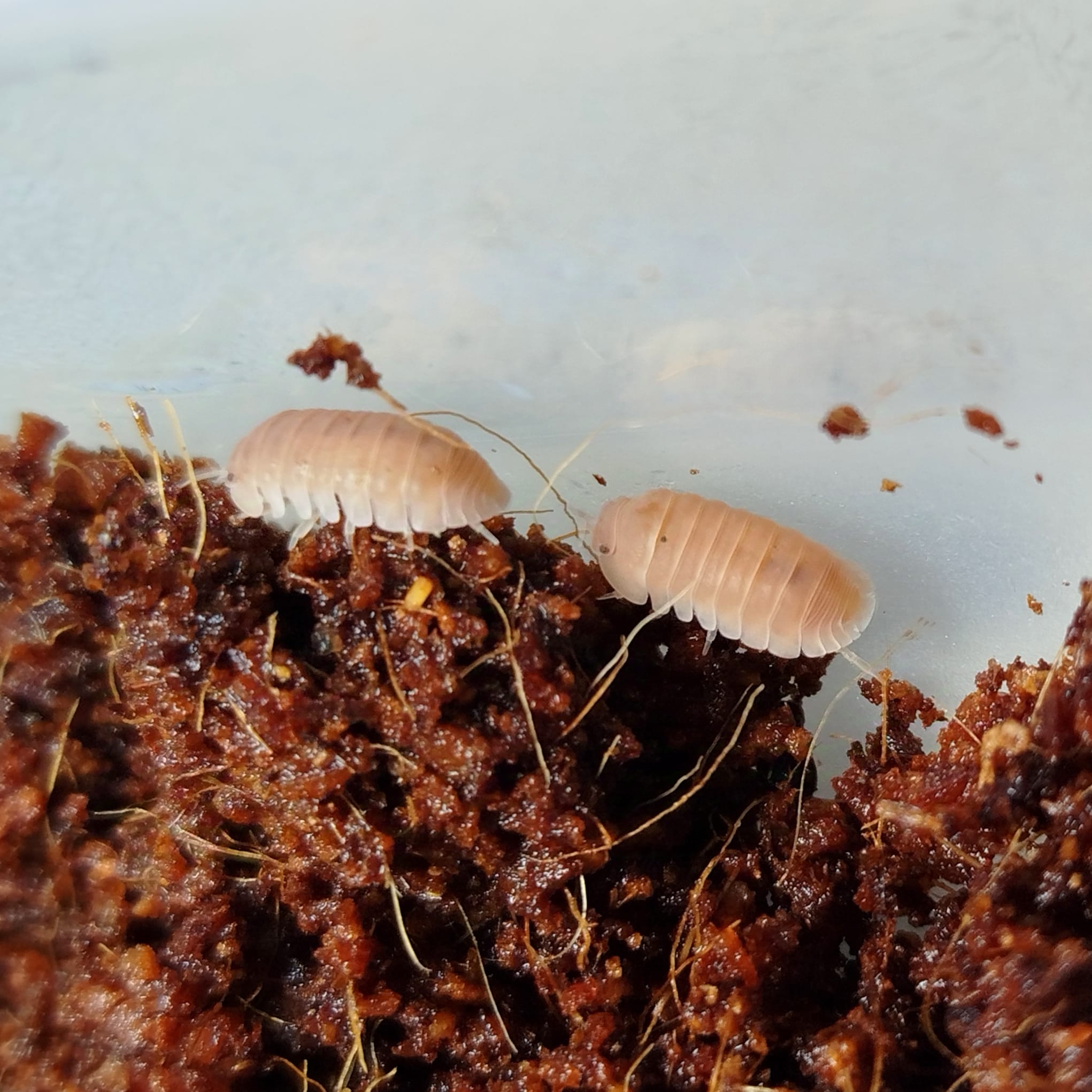
The Cubaris murina “Papaya” is a fascinating isopod with a unique orange and brown coloration. Perfect for tropical terrariums, it is easy to care for and helps maintain a healthy environment by decomposing organic matter. A true gem for your collection!
Technical Data Sheet: Cubaris murina “Papaya”
Common Name: Papaya Isopod
Scientific Name: Cubaris murina
Family: Armadillidiidae
Origin: Thailand, tropical regions of Asia
Description:
The Cubaris murina “Papaya” is an isopod from the Armadillidiidae family, known for its vibrant colors and exoskeleton in shades of orange and brown, resembling the papaya fruit. Its segmented body is protected by a rigid exoskeleton that allows it to roll into a ball as a defense mechanism. This isopod is relatively small, reaching an adult size of about 2 to 3 cm.
Habitat:
The Cubaris murina “Papaya” is a terrestrial species that thrives in dark, humid soils typical of tropical ecosystems. It prefers warm and moist environments, such as well-maintained terrariums. It should be kept under conditions similar to other tropical isopods, with a substrate of damp soil, bark, and dry leaves.
Temperature & Humidity:
- Temperature: Between 22°C and 28°C (72°F – 82°F).
- Humidity: High, around 60-80%. It is essential to maintain the substrate consistently moist but not waterlogged.
Diet:
This omnivorous species feeds on decomposing organic matter such as dry leaves, rotting wood, and vegetable scraps. It can also consume small pieces of fruits and vegetables, but these should be offered in moderation to prevent mold growth.
Reproduction:
Cubaris murina “Papaya” has a relatively fast reproductive cycle. The female carries the offspring in her marsupium (brood pouch) until they are fully developed. The young emerge from the pouch in their juvenile form and grow quickly.
Care:
- Terrarium: Ensure the enclosure has enough space and dark hiding spots for the isopods.
- Substrate: A mix of soil, dry leaves, and bark is ideal for maintaining proper humidity and providing burrowing areas.
- Decor: Natural elements such as stones, wood pieces, and live or artificial plants are recommended to create a naturalistic habitat.
Behavior:
The Cubaris murina “Papaya” is a calm isopod, but it may exhibit defensive behavior by rolling into a ball when threatened. They are mostly nocturnal, showing more activity at night.
Compatibility:
This isopod can be kept in groups, but the terrarium should provide enough resources to avoid excessive competition. It can coexist with other isopod species as long as their environmental requirements match.
Advantages:
- Visually Appealing: Its orange and brown coloration makes it a striking species for terrariums.
- Natural Decomposer: Helps recycle organic matter, contributing to a healthy ecosystem.
- Easy to Care For: Requires basic care in a tropical environment, making it an ideal species for beginners.
| Options | 1 unit |
|---|
Related products
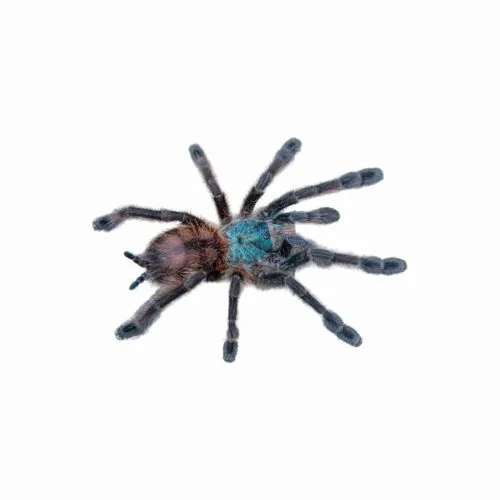
Caribena versicolor
Discover the charming Caribbean versicolor tarantula for your terrarium. With its beautiful coloration, it is a perfect addition for any spider fan. We recommend having previous experience with tarantulas or arachnids in general. Bring beauty and fascination to your space with this captivating species.