
Drosophila melanogaster (Small Fruit Fly)
3,70€
500 ml Culture
Important:
We cannot guarantee the arrival of Drosophila cultures in optimal condition, as they may tip over during transportation. If this happens, replace the paper towel and keep the culture at a temperature of 22–25°C. Within a few days, new larvae should emerge.
there is stock
Technical Data Sheet for Drosophila melanogaster (Small Fruit Fly)
Taxonomic Classification
- Scientific name: Drosophila melanogaster
- Common name: Small fruit fly
- Family: Drosophilidae
- Order: Diptera
General Description
Drosophila melanogaster, commonly known as the small fruit fly, is a tiny fly widely used in scientific research and as live food for reptiles, amphibians, and other small animals. Its size ranges from 2 to 3 mm, with a light brown body and characteristic red eyes.
Natural Habitat
It is typically found around ripe or decaying fruits. It thrives in warm and humid climates but is highly adaptable to various environmental conditions.
Reproduction
- Life cycle: Complete (egg, larva, pupa, adult).
- Cycle duration: Approximately 10–12 days at 25 °C.
- Fertility: A single female can lay between 400 and 500 eggs in her lifetime.
Uses in Vivariums
- Live food: Ideal for small reptiles, amphibians, and arthropods due to its size and high availability.
- Advantages:
- Easy to breed at home.
- Does not fly away easily due to its clumsy flight pattern.
Breeding Requirements
- Breeding container: Plastic or glass jars with perforated lids.
- Substrate: A mix of mashed fruit or prepared fly food.
- Humidity: Moderate, to prevent the substrate from drying out.
- Temperature: Optimal between 20–25 °C.
Benefits and Applications
- Scientific research: Model organism for genetic and biological studies.
- Easy handling: Does not require complex equipment for breeding.
- Nutritional value: High in protein, suitable as a balanced food source for small animals.
Related products
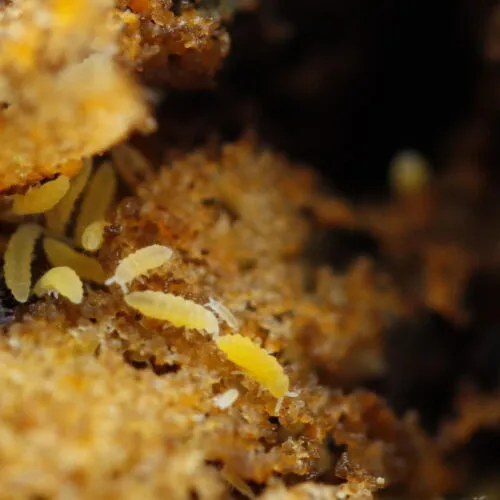
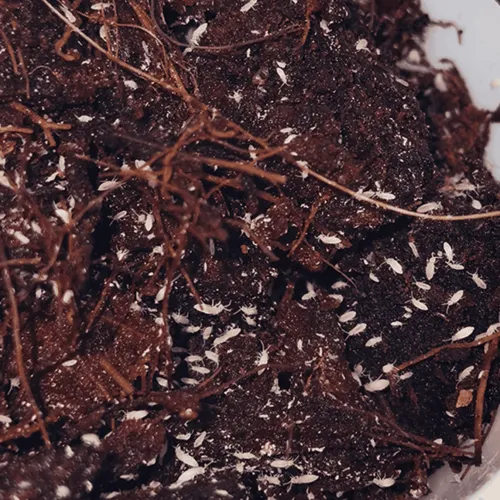
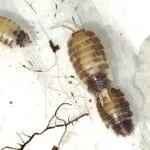
Ceratophysella sp. ‘Yellow Albino’ (springtail)
Springtails Ceratophysella sp. "Yellow Albino" are the perfect tiny allies to keep your terrarium clean 🌿. They act as a natural cleaning team, breaking down waste and maintaining the ecosystem's balance. Let your terrariums shine with life! 🐾
⚠️ Important: Springtails, small and earth-colored, can be hard to spot. Avoid rough handling to prevent harm.