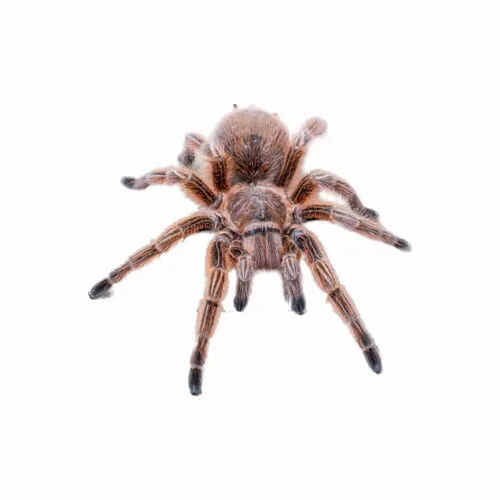
Grammostola pulchripes
Price range: 20,00€ through 80,00€
Grammostola pulchripes – Technical Data Sheet
Scientific name: Grammostola pulchripes
Common name: Chaco Golden Knee Tarantula
Family: Theraphosidae
Origin: Paraguay, Argentina and the Greater Chaco region
Type: Terrestrial tarantula
Temperament: Calm and docile
Experience level: Beginner to intermediate
Adult size: 18–22 cm leg span
Lifespan: Females 20–25 years / Males 5–7 years
Growth rate: Slow
Activity: Primarily nocturnal
Description
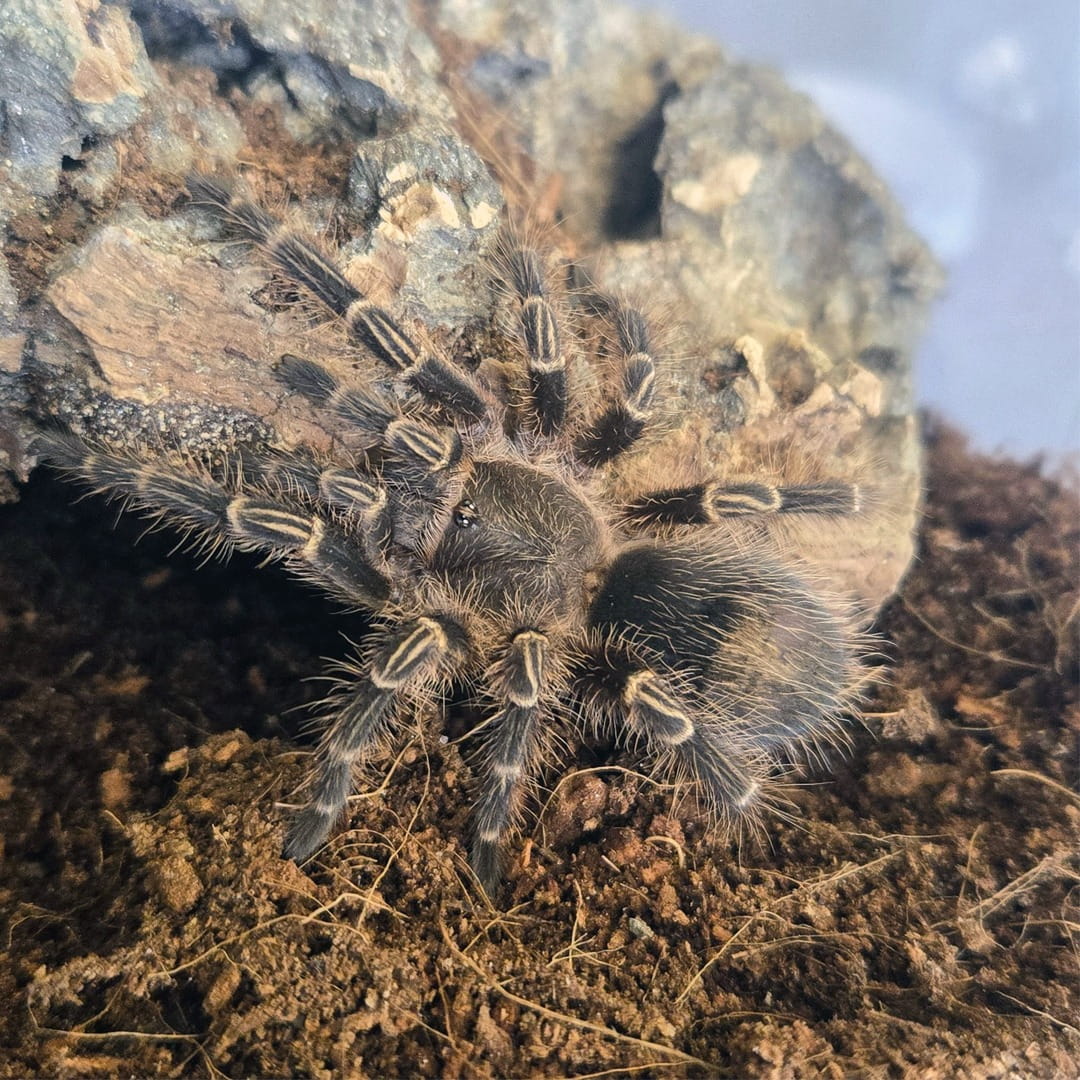
Grammostola pulchripes is one of the most highly regarded tarantulas in the hobby thanks to its calm temperament, hardiness and striking appearance. It is characterized by its dark coloration combined with distinctive golden tones on the leg joints, which have earned it the common name “Golden Knee.”
Its generally calm behavior makes it an excellent choice for keepers looking for a species that is relatively easy to maintain and observe. Although primarily terrestrial, it may dig shallow burrows or make use of natural shelters to feel secure.
Care Parameters
Temperature: 22–28 °C
Humidity: 55–70%
Ventilation: Medium to high
Recommended substrate: Coconut fiber, fertilizer-free peat or substrates suitable for terrestrial tarantulas.
Substrate depth: 8–15 cm to allow for burrowing.
Feeding
This is an insectivorous species with a good appetite. Suitable food items include:
- Crickets (Acheta domesticus)
- Blaptica dubia
- Small grasshoppers
- Mealworms and Zophobas occasionally
Feeding frequency will depend on the age and size of the specimen.
Recommended Terrarium
For adult specimens, a terrestrial terrarium with a spacious floor area and good ventilation is recommended. Excessive height should be avoided to minimize the risk of falls. The enclosure should include suitable hides, a sufficiently deep layer of substrate and a small dish containing clean water.
Breeding
Captive breeding is possible for experienced keepers. Females are long-lived and can produce egg sacs containing numerous spiderlings when appropriate conditions are provided.
Notes
- One of the best species for beginners who are starting out in tarantula keeping.
- It has a relatively slow growth rate.
- It rarely displays defensive behavior when properly housed and cared for.
- Its attractive contrast between black and golden tones makes it one of the most popular tarantula species in the world.
Venom and Urticating Hairs
Venom: Low medical significance to humans.
Urticating hairs: Yes, present and used as a defensive mechanism.
Important: Venom and urticating hairs can cause different reactions in different individuals, including possible allergic reactions.
| Options | Unsexed 1.5 cm (legspan), Unsexed 3 cm, Female 5 cm |
|---|
Related products
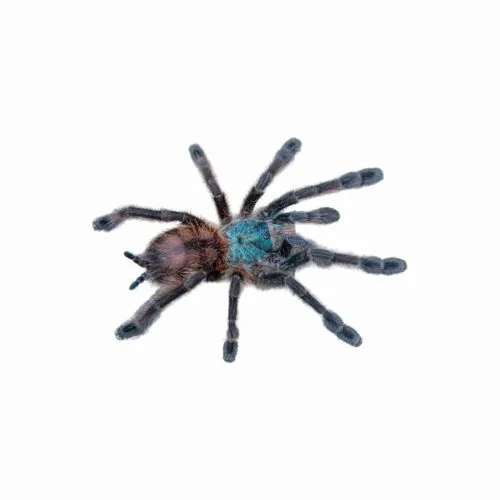
Caribena versicolor
Discover the charming Caribbean versicolor tarantula for your terrarium. With its beautiful coloration, it is a perfect addition for any spider fan. We recommend having previous experience with tarantulas or arachnids in general. Bring beauty and fascination to your space with this captivating species.