Neoholothele incei “Gold”
Price range: 22,00€ through 55,00€
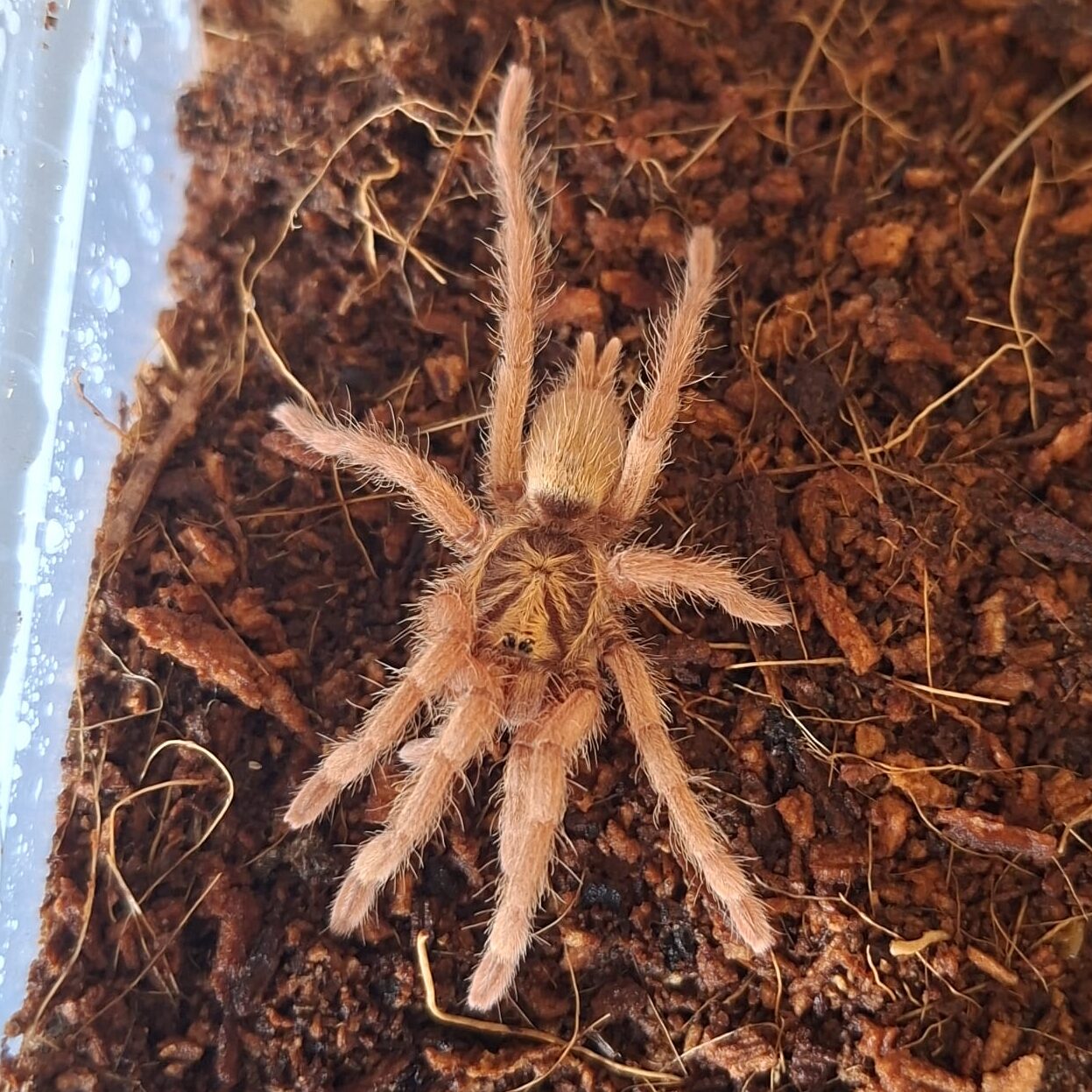
Neoholothele incei “Gold” is a stunning dwarf tarantula with beautiful golden colouring. Highly active and known for its impressive webbing, it has a medium to fast growth rate and is relatively easy to care for. An excellent choice for keepers looking for a small, striking tarantula with fascinating behaviour.
Technical Sheet – Neoholothele incei “Gold”
Scientific name: Neoholothele incei
Variety / Morph: “Gold”
Common name: Trinidad Olive Gold / Trinidad Olive
Family: Theraphosidae
Origin: Trinidad and Tobago and Venezuela
Type: New World tarantula
Lifestyle: Terrestrial, opportunistic burrower and prolific webber
Adult size: Approximately 5–7 cm (2–2.8 in) in leg span
Growth rate: Medium to fast
Lifespan: Females approximately 6–10 years; males around 1–3 years
Temperament: Nervous and very fast-moving; generally not aggressive, but may react quickly when disturbed
Urticating hairs: None
Venom: Generally considered to be of low potency, although handling should always be avoided
Care level: Intermediate
Activity: High, especially when constructing webs
Characteristics
Neoholothele incei “Gold” is one of the most attractive colour morphs of this small tarantula species. It is characterised by golden and metallic tones that become particularly noticeable around the carapace as the specimen matures. The species is also known for its relatively small size and its remarkable ability to cover the enclosure with a dense network of silk.
Despite its small size, it is a highly active tarantula with very fast movements. It can construct tunnels and silk retreats using branches, cork bark and other elements of the enclosure as anchor points.
Enclosure
A horizontal enclosure with secure closure and good ventilation is recommended. Although primarily terrestrial, this species may make use of different levels and structures when constructing its extensive webbing.
Suggested enclosure size for an adult: approximately 20 × 20 cm of floor space, adjusted according to the size of the individual.
Substrate: approximately 5–8 cm deep, allowing the tarantula to excavate shallow burrows or retreats.
Recommended furnishings include:
- Cork bark.
- Branches and other structures that provide anchor points for webbing.
- A small hide.
- A shallow water dish.
- Good cross-ventilation.
This species can cover a large portion of the enclosure with silk, so providing suitable structures and anchor points encourages natural behaviour and allows its impressive webbing to be observed.
Temperature
Recommended temperature: 22–28 °C (72–82 °F)
Preferred range: approximately 24–27 °C (75–81 °F).
It can be kept at room temperature provided that the temperature remains stable and within a suitable range. Exposure to extreme temperatures should be avoided.
Humidity
Target humidity: approximately 60–75%.
It is preferable to maintain moderate humidity without keeping the substrate constantly saturated. Good ventilation is particularly important to prevent excessive moisture accumulation.
A shallow dish of clean, fresh water should always be available.
Feeding
It readily accepts appropriately sized prey, such as:
- Crickets.
- Small cockroaches.
- Insect larvae.
Juveniles should be offered prey appropriate to their size, while adults can be fed somewhat larger prey. As with other tarantulas, feeding frequency should be adjusted according to the specimen’s age, size and body condition.
During premoult and after moulting, it is normal for the tarantula to temporarily refuse food.
Behaviour
Neoholothele incei “Gold” is particularly appreciated for its active behaviour and exceptional ability to produce large amounts of silk.
It is a very fast and somewhat nervous species, so handling is not recommended. If it feels threatened, it may attempt to flee rapidly or adopt a defensive posture.
Although this species has been successfully kept in communal setups in captivity, keeping multiple specimens together involves risks and should not be considered necessary for proper husbandry.
Moulting
During moulting, the tarantula may stop feeding and remain hidden for a variable period of time. It should not be disturbed or offered food while it is in the process of moulting.
After moulting, it is advisable to wait until the fangs and mouthparts have hardened before offering food again.
Breeding
This species can be successfully bred in captivity. The Gold form is associated with a recessive genetic variation, and both Gold and normal-coloured offspring may occur within the same brood.
Safety
Handling this tarantula is not recommended. Its small size and very fast movements can make handling difficult and increase the risk of escapes or accidents.
Although its venom is generally considered to be of low potency, individual reactions can vary. In the event of a bite or any adverse reaction, seek professional medical advice.
Quick Summary
| Characteristic | Details |
|---|---|
| Species | Neoholothele incei |
| Variety | Gold |
| Origin | Trinidad and Tobago / Venezuela |
| Size | Approx. 5–7 cm (2–2.8 in) |
| Type | New World |
| Lifestyle | Terrestrial / opportunistic burrower |
| Growth rate | Medium to fast |
| Temperature | 22–28 °C (72–82 °F) |
| Humidity | Approx. 60–75% |
| Temperament | Nervous and very fast-moving |
| Urticating hairs | None |
| Activity | High |
| Webbing | Very prolific |
| Difficulty | Intermediate |
| Handling | Not recommended |
| Options | Male (4 cm legspan), Female (4 cm legspan), Male + Female Pair (4 cm legspan) |
|---|
Related products
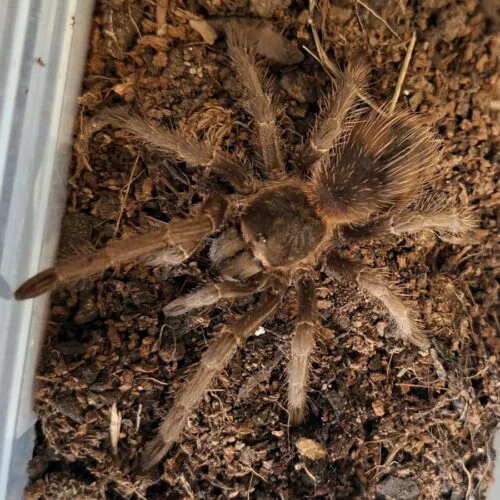
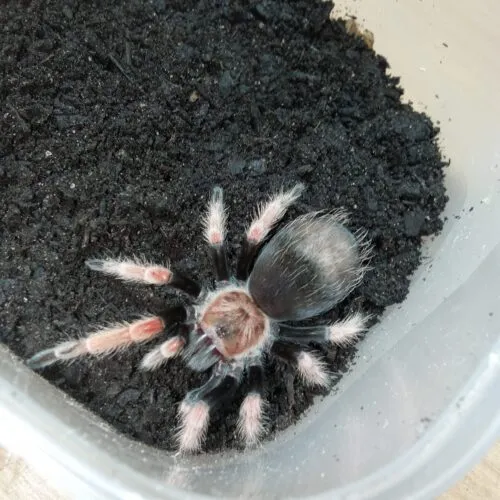
Lasiodora parahybana
Lasiodora parahybana is a spectacular terrestrial tarantula known for its rapid growth, impressive size and striking salmon-coloured hairs. A robust and hardy species, highly appreciated by experienced keepers looking for a large, impressive specimen that can thrive with proper care and suitable enclosure conditions.
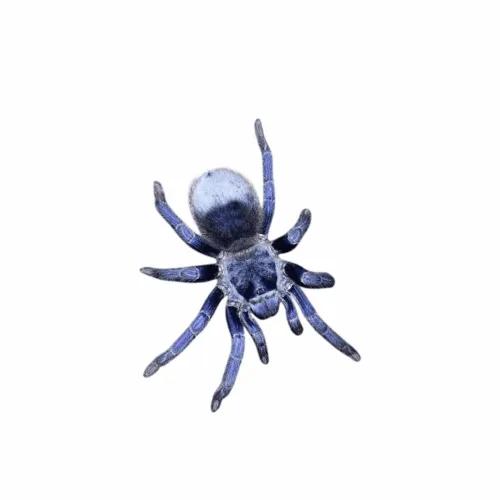
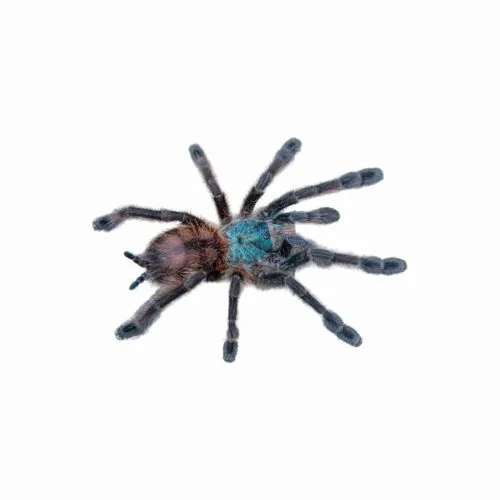
Caribena versicolor
Discover the charming Caribbean versicolor tarantula for your terrarium. With its beautiful coloration, it is a perfect addition for any spider fan. We recommend having previous experience with tarantulas or arachnids in general. Bring beauty and fascination to your space with this captivating species.