
Porcellio expansus
3,00€
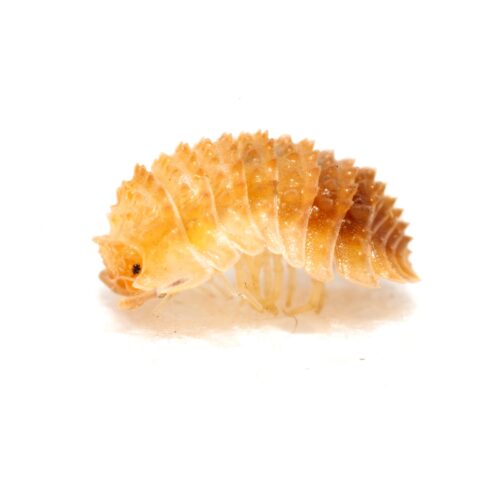
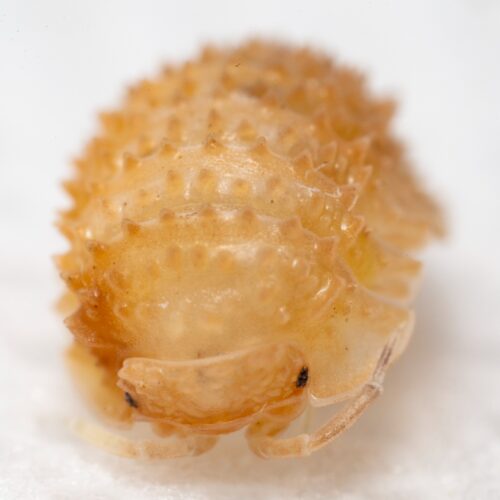
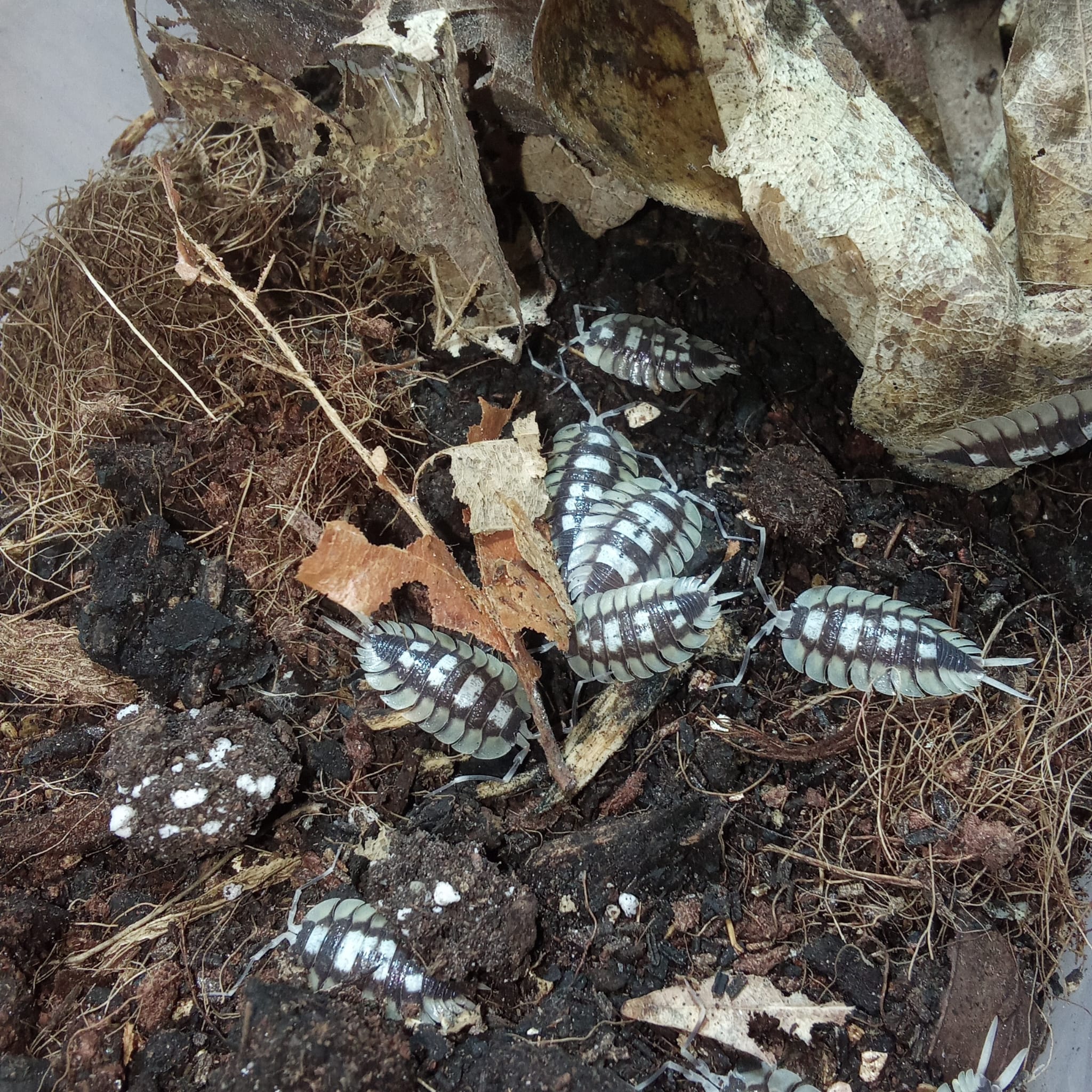
Porcellio expansus is a sturdy and eye-catching isopod, perfect for those looking to add something different to their terrarium. Easy to care for, active, and full of personality. A great choice to bring a special touch to your natural setup! 🌿
🐜 Technical Sheet – Porcellio expansus
Scientific name: Porcellio expansus
Common name: Expansus isopod
Family: Porcellionidae
Origin: Mediterranean region, mainly Spain
🧬 Description
Porcellio expansus is a large and robust terrestrial isopod, considered one of the biggest species within the Porcellio genus. It has a rough-textured, elongated body with grayish or ochre tones. Its most striking feature is the pair of long, prominent uropods at the rear, giving it a prehistoric look.
📏 Size
Adults: Up to 2.8–3.0 cm
Juveniles: 2–4 mm at birth
🌡️ Ideal Conditions
Temperature: 20–26 °C
Humidity: Medium to high (60–80%)
Ventilation: High (essential to prevent mold)
Lighting: Indirect or low light preferred
🏠 Recommended Terrarium
Terrarium type: Horizontal, with deep substrate and good ventilation
Substrate: Coconut fiber, leaf litter, bark, moss, and decaying wood
Decoration: Large bark pieces, flat stones, and natural hiding spots
🍽️ Diet
Detritivores. They feed on:
- Dry leaves
- Decaying wood
- Vegetables (carrot, zucchini, cucumber, etc.)
- Calcium sources (cuttlebone, crushed eggshell)
🐣 Reproduction
Internal sexual reproduction
Females carry the eggs in a ventral pouch (marsupium)
High reproductive rate under optimal conditions
✅ Notes
They do not roll up like members of the Armadillidiidae family
Their appearance makes them a popular choice for terrariums and bioactive setups
They require a balanced mix of humidity and ventilation to avoid fungal issues
Compatible with peaceful invertebrates in bioactive environments
| Options | 1 unit |
|---|