
Elliptorhina Javanica
Price range: 0,50€ through 2,25€
Cubaris sp. "White Side"
Price range: 2,00€ through 8,00€
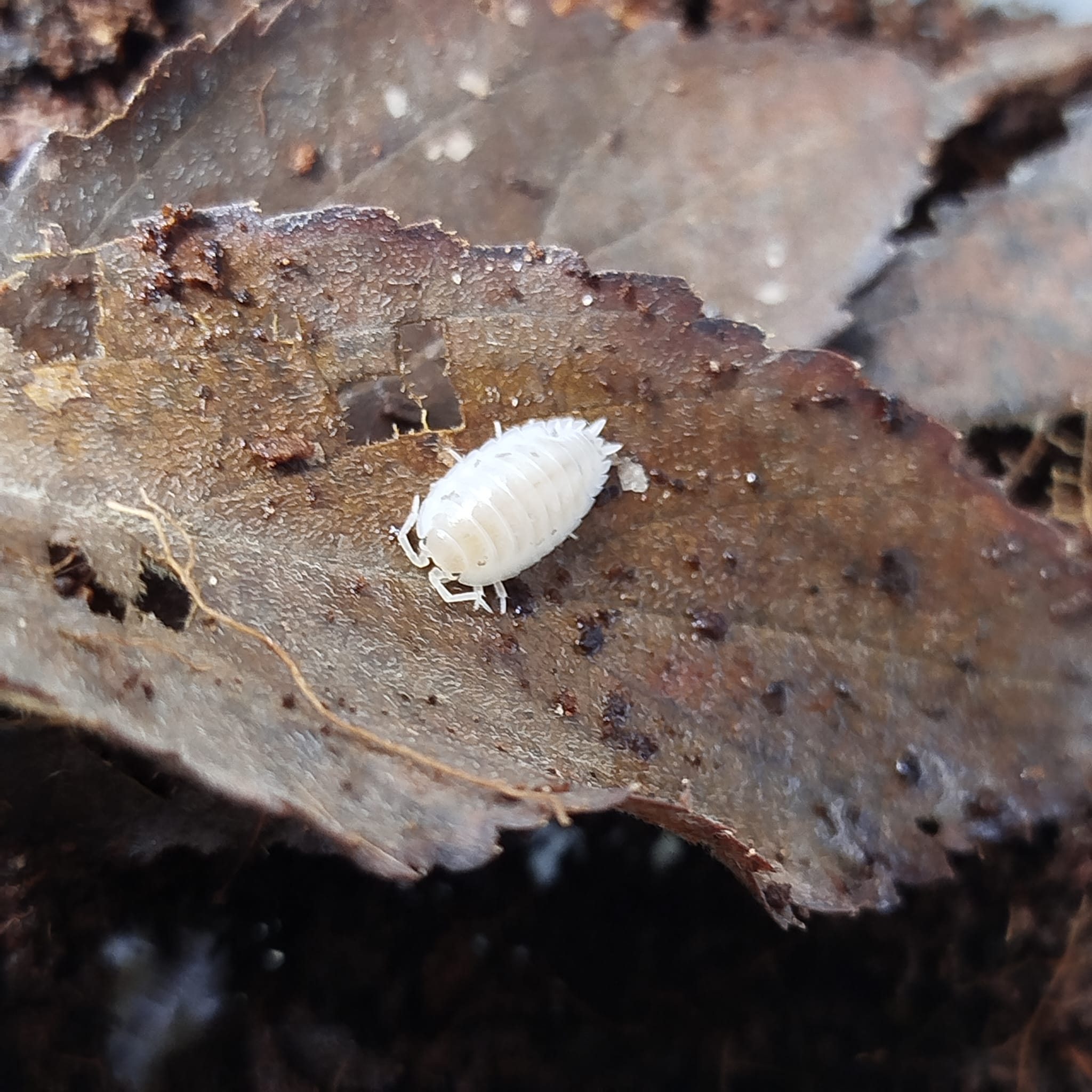
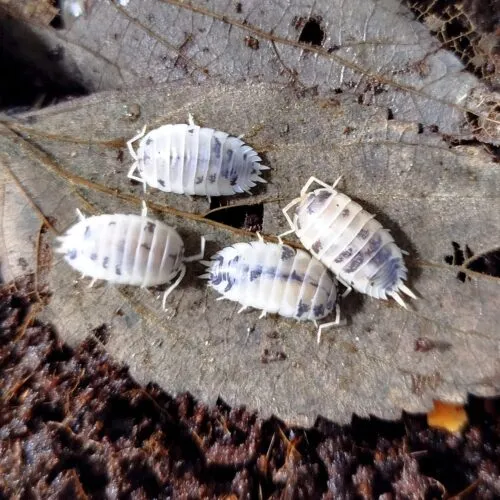
Porcellio laevis white
5,00€
Add a unique touch to your terrarium with the Porcellio laevis “White” isopod. Easy maintenance isopods make it ideal for hobbyists and experts. Transform your natural space today!
Description
Technical Data Sheet: Isopod Porcellio laevis “White”
Scientific Name: Porcellio laevis
Common Name: White Isopod, Albino Isopod
Taxonomic Classification:
- Kingdom: Animalia
- Phylum: Arthropoda
- Class: Malacostraca
- Order: Isopoda
- Family: Porcellionidae
- Genus: Porcellio
- Species: Porcellio laevis
Description:
- Color: The “White” variety has a completely white coloration, sometimes with slight yellowish or cream tones. The lack of pigmentation is characteristic of this variety.
- Size: Adults measure between 10 and 18 mm in length.
- Shape: Elongated and slightly flattened dorsoventrally. It has seven pairs of legs and two pairs of antennae, with the second pair being longer.
- Exoskeleton: Hard and segmented, providing protection and structure to the isopod.
Distribution and Habitat:
- Distribution: Cosmopolitan. Found in various regions worldwide, especially in temperate climates.
- Habitat: Prefers humid and shaded environments, such as under stones, fallen leaves, decaying logs, and soil rich in organic matter. It adapts well to anthropogenic environments such as gardens and urban areas.
Ecology and Behavior:
- Diet: Detritivore. Feeds on decomposing organic matter, including leaves, decaying wood, and other plant debris.
- Behavior: Nocturnal, searching for food at night and sheltering in humid places during the day. Forms large colonies and is known for its ability to adapt to different environments.
- Reproduction: Oviparous. Females carry eggs in a brood pouch (marsupium) under their bodies until they hatch. The young are similar to adults but smaller and less pigmented.
Care in Captivity:
- Terrarium: Requires a container with good ventilation and a moist substrate composed of soil, decomposing leaves, and rotting wood. Maintaining high humidity is essential to prevent dehydration.
- Feeding: Can be provided with a diet of fresh fruits and vegetables, as well as dried leaves and decaying wood. Avoid moldy food.
- Humidity and Temperature: Maintain a relative humidity of 70-90% and a temperature between 18-24°C.
Additional Observations:
- Molting: Isopods molt their exoskeleton periodically to grow. During molting, the isopod is more vulnerable to predators and dehydration.
- Ecological Benefit: Contribute to nutrient recycling in ecosystems by decomposing organic matter, improving soil fertility.
Additional information
| Options | 10 units |
|---|
Related products

Sold out
Sold out
Sold out
Sold out
Sold out


