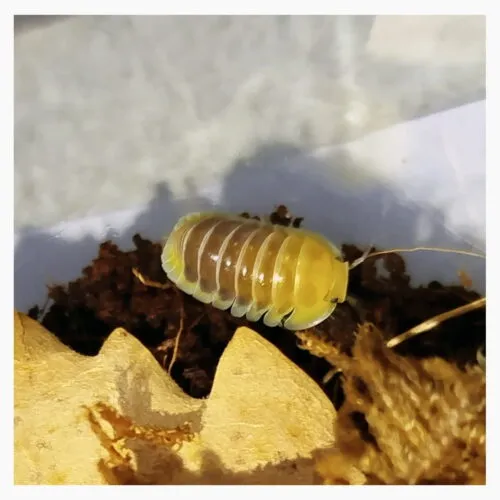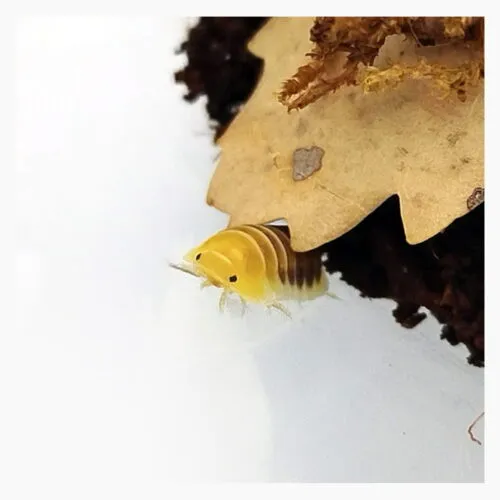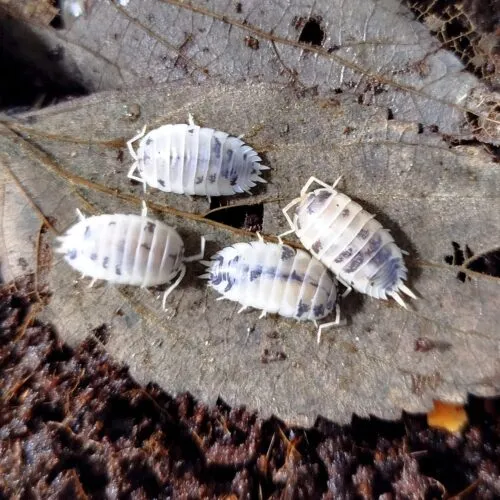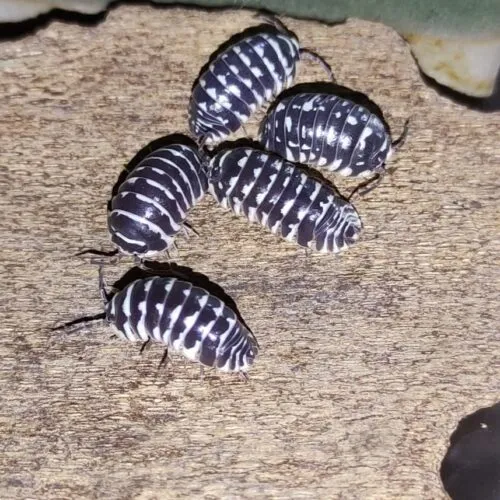
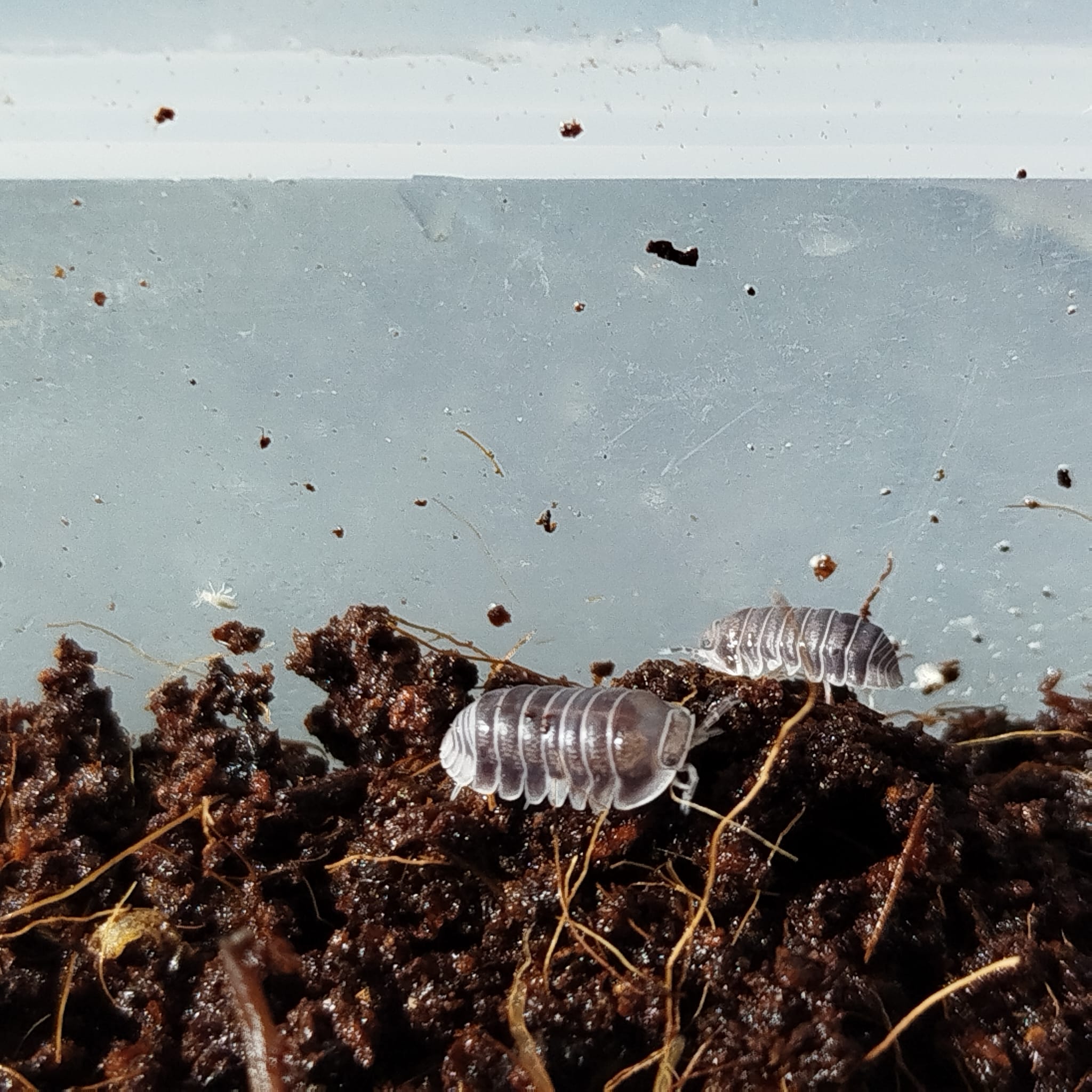
Cubaris sp. “White Side”
Price range: 2,00€ through 8,00€
Discover the wonder of nature in your own home with the fascinating Cubaris “White Side” isopod! Bring a unique and exotic touch to your terrarium while enjoying its beauty and vital role in the ecosystem. Get yours today and immerse yourself in the world of biodiversity! 🌿✨
Technical Data Sheet: Cubaris “White Side” Isopod
Scientific Name: Cubaris sp. “White Side”
Common Name: “White Side” Isopod
Taxonomic Classification:
- Kingdom: Animalia
- Phylum: Arthropoda
- Class: Malacostraca
- Order: Isopoda
- Family: Cubaridae
- Genus: Cubaris
- Species: sp. (unidentified species)
Description:
- Color: The “White Side” variety is characterized by having an opaque white color on the ventral side of its body, while the dorsal side may be white, grayish, or have brownish tones.
- Size: Adults typically measure between 3 and 5 mm in length.
- Shape: Oval-shaped and flattened dorsoventrally, with seven pairs of legs. It has a similar appearance to other isopods but with a distinctive color arrangement.
- Exoskeleton: Hard and segmented, providing protection and structural support to the isopod.
Distribution and Habitat:
- Distribution: This species is believed to be native to tropical or subtropical areas, although it has also been found in urban environments and terrariums in different parts of the world.
- Habitat: Prefers humid and dark environments, such as tropical forests, where it shelters under fallen leaves, decaying logs, and other plant debris.
Ecology and Behavior:
- Diet: Detritivore. It feeds mainly on decaying organic matter, such as dead leaves, rotten wood, and other plant debris.
- Behavior: Nocturnal and gregarious. Tends to gather in colonies and forage for food at night, while during the day it shelters in dark and humid places to avoid dehydration and predators.
- Reproduction: Ovoviviparous. Females carry eggs within a cavity in their body until they hatch, releasing offspring similar to adults but smaller.
Care in Captivity:
- Terrarium: A terrarium with humid substrate composed of soil, moss, and decaying leaves is recommended. It is important to maintain a high relative humidity to ensure the well-being of the isopods.
- Feeding: They can be fed a variety of fresh and decaying foods, such as fruits, vegetables, dried leaves, and decaying wood. Specific isopod dietary supplements can also be offered.
- Humidity and Temperature: Maintain a relative humidity of 70-80% and a temperature between 20-25°C for optimal breeding conditions.
Additional Observations:
- Coloration: The coloration of Cubaris “White Side” isopods may vary slightly between individuals and may influence their camouflage ability in their natural environment.
- Interaction with Other Organisms: They can be part of a balanced terrarium ecosystem, contributing to the decomposition cycle and maintaining soil quality.
| Options | 1 unit, 5 units |
|---|
Related products
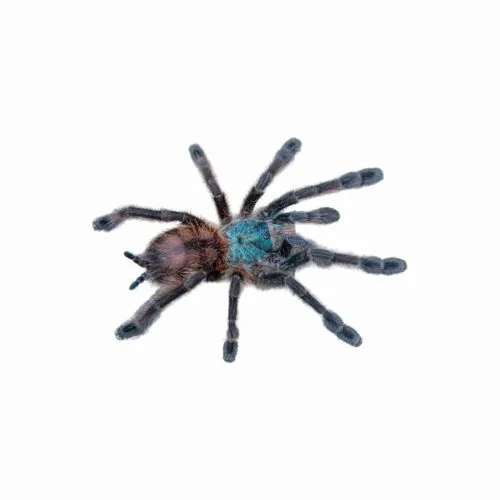
Caribena versicolor
Discover the charming Caribbean versicolor tarantula for your terrarium. With its beautiful coloration, it is a perfect addition for any spider fan. We recommend having previous experience with tarantulas or arachnids in general. Bring beauty and fascination to your space with this captivating species.