
Springtails (Tropical white)
Price range: 0,99€ through 6,50€
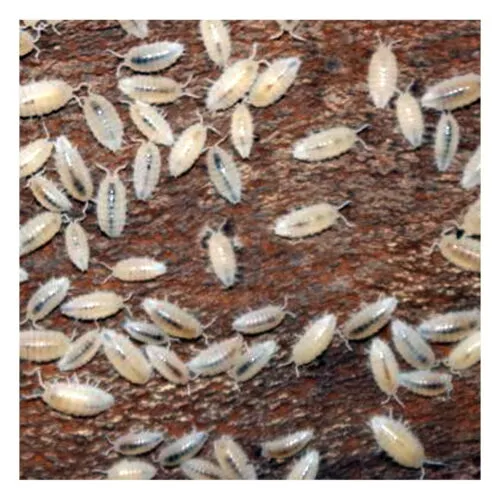
Tropical white springtails are perfect for bioactive terrariums. They act as a natural clean-up crew, controlling mold and breaking down organic waste. Also ideal as live food for reptiles, amphibians, and arthropods. Easy to keep, fast breeding, and essential for a balanced ecosystem.
Technical Sheet – Tropical white (White Springtails)
Scientific name: Tropical white
Common name: White springtails
Family: Isotomidae
Origin: Cosmopolitan distribution (widely cultured)
Size: 1 – 3 mm
Coloration: Translucent white
Habitat and behavior
This species inhabits moist, organic-rich soils. It is commonly found in terrariums, paludariums, and controlled cultures, where it plays a key role in nutrient recycling. They are highly active organisms that move quickly, especially in high humidity conditions.
Feeding
They feed on:
- Fungi and mold
- Decomposing organic matter
- Plant debris
- Microorganisms
In culture, they can be fed with yeast, oat flakes, or specialized microfauna diets.
Care requirements
- Temperature: 18 – 25 °C
- Humidity: High (70 – 100%)
- Recommended substrate: Coconut fiber, peat, or plaster with activated charcoal
- Lighting: Not required (they prefer dark environments)
Reproduction
They reproduce mainly through parthenogenesis (without the need for males), allowing rapid colony growth. Under optimal conditions, populations increase steadily and reliably.
Use in terrariums
- Natural clean-up crew
- Helps prevent mold and fungal growth
- Improves substrate quality
- Ideal for bioactive terrariums, paludariums, and vivariums
Use as live food
- Ideal live food for reptile and amphibian hatchlings
- Suitable for small or juvenile arthropods
- Perfect size for animals that cannot consume larger prey
- Provides a constant food source in bioactive setups
Compatibility
Suitable to coexist with:
- Reptiles
- Amphibians
- Arthropods
- Isopods
Completely harmless to animals and plants.
Advantages
- Easy to maintain
- Fast reproduction
- Dual function: clean-up crew + live food
- Helps maintain a balanced ecosystem
- Reduces odors and visible decomposition
Recommendations
Maintain high humidity and avoid drying out the culture. Do not expose to extreme temperatures. Provide food in moderation to prevent contamination from excess.
| Options | 60 ml, 500 ml, 1000 ml |
|---|
Related products
Ceratophysella sp. ‘Lilac’ (Springtails)
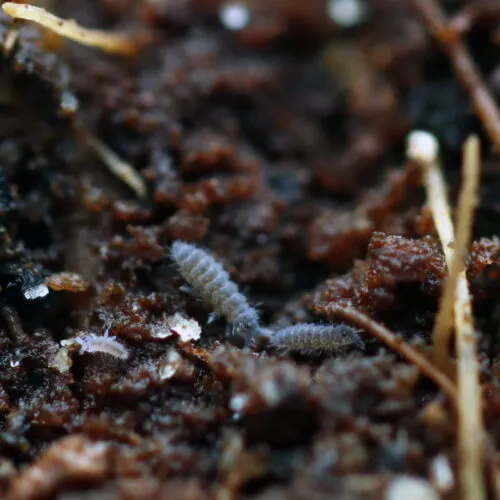
🌱 The springtail Ceratophysella sp. 'Lilac' is ideal for bioactive terrariums. Its unique lilac color and ability to decompose organic matter help keep your ecosystem clean and balanced. 🐜 Easy to care for and perfect as live food.
⚠️ Important: Springtails, small and earth-colored, are difficult to distinguish. Avoid handling them roughly to prevent damage.