
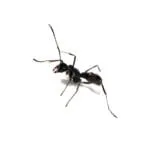
Stick insect (Medauroidea extradentata)
5,00€
Common name: Stick insect
Scientific name: Medauroidea extradentata
Taxonomic classification:
Kingdom: Animalia
Phylum: Arthropoda
Class: Insecta
Order: Phasmatodea
Family: Phasmatidae
Genus: Medauroidea
Species: M. extradentata
Physical description:
The stick insect is a long, thin insect that can measure up to 10 cm in length. Its body resembles a dry branch or stem, allowing it to blend perfectly among plants and avoid predators. It has long and thin legs, filiform antennae, and large compound eyes. Its color can range from light brown to dark brown, depending on its environment.
Habitat and distribution:
The stick insect is found in tropical and subtropical regions of Central and South America, as well as some Caribbean islands. It prefers to live in forested areas, where it can camouflage among the plants and feed on them.
Behavior and diet:
The stick insect is mainly herbivorous and feeds on leaves and stems of various plants. It has nocturnal habits and is active at night. During the day, it remains motionless, camouflaged among plants to avoid being seen by predators.
Reproduction:
The female stick insect can lay between 100 and 1,000 eggs in a single clutch. The eggs are deposited in the soil and can take 3 to 6 months to hatch. Young insects resemble adults, but are smaller and light green in color.
Conservation status:
The stick insect is not considered endangered, although the destruction of its natural habitat and environmental pollution can affect its long-term survival.
Ecological importance:
The stick insect is important in the ecosystem as a food source for other animals, such as birds and reptiles. Additionally, its camouflage ability is a very effective evolutionary strategy to avoid being preyed upon by predators and is a fascinating example of adaptation to the environment.
| Options | 10 nymphs insect, 5 medium insects, 3 adult insects, 20 eggs |
|---|
Related products