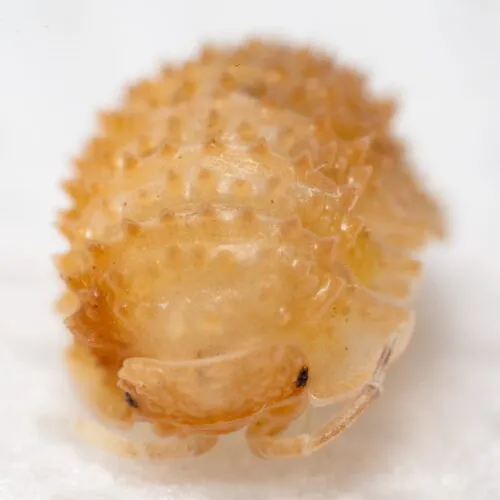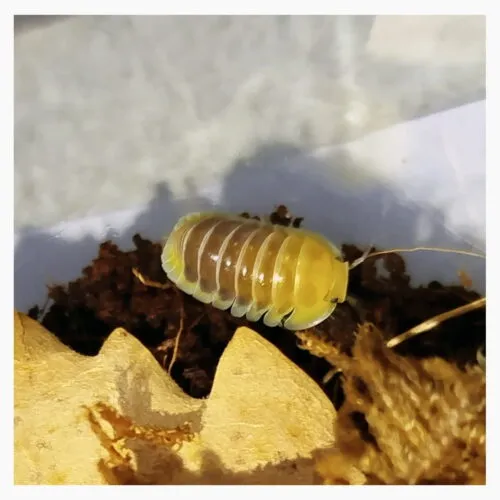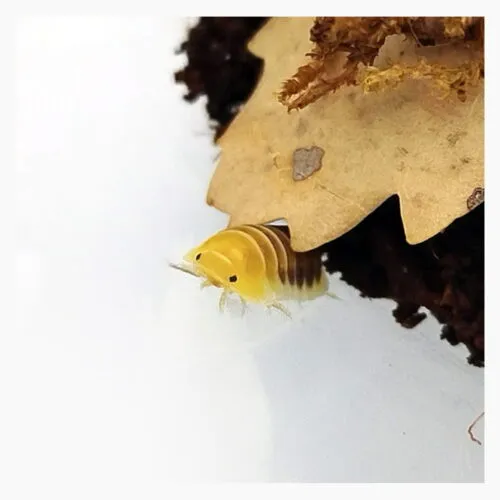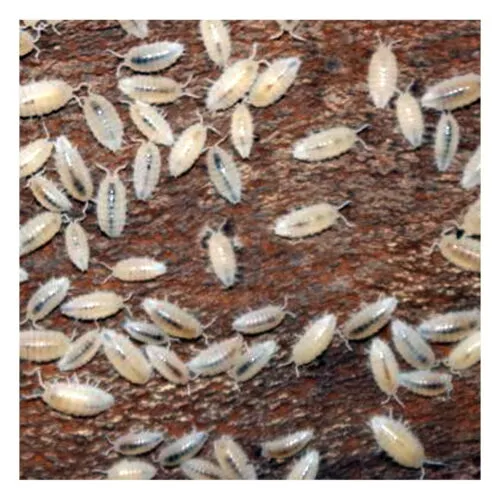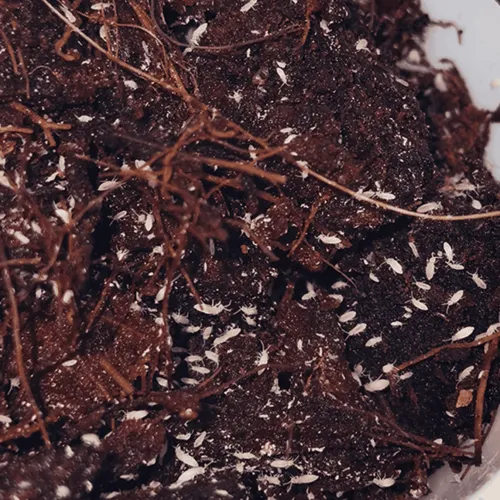
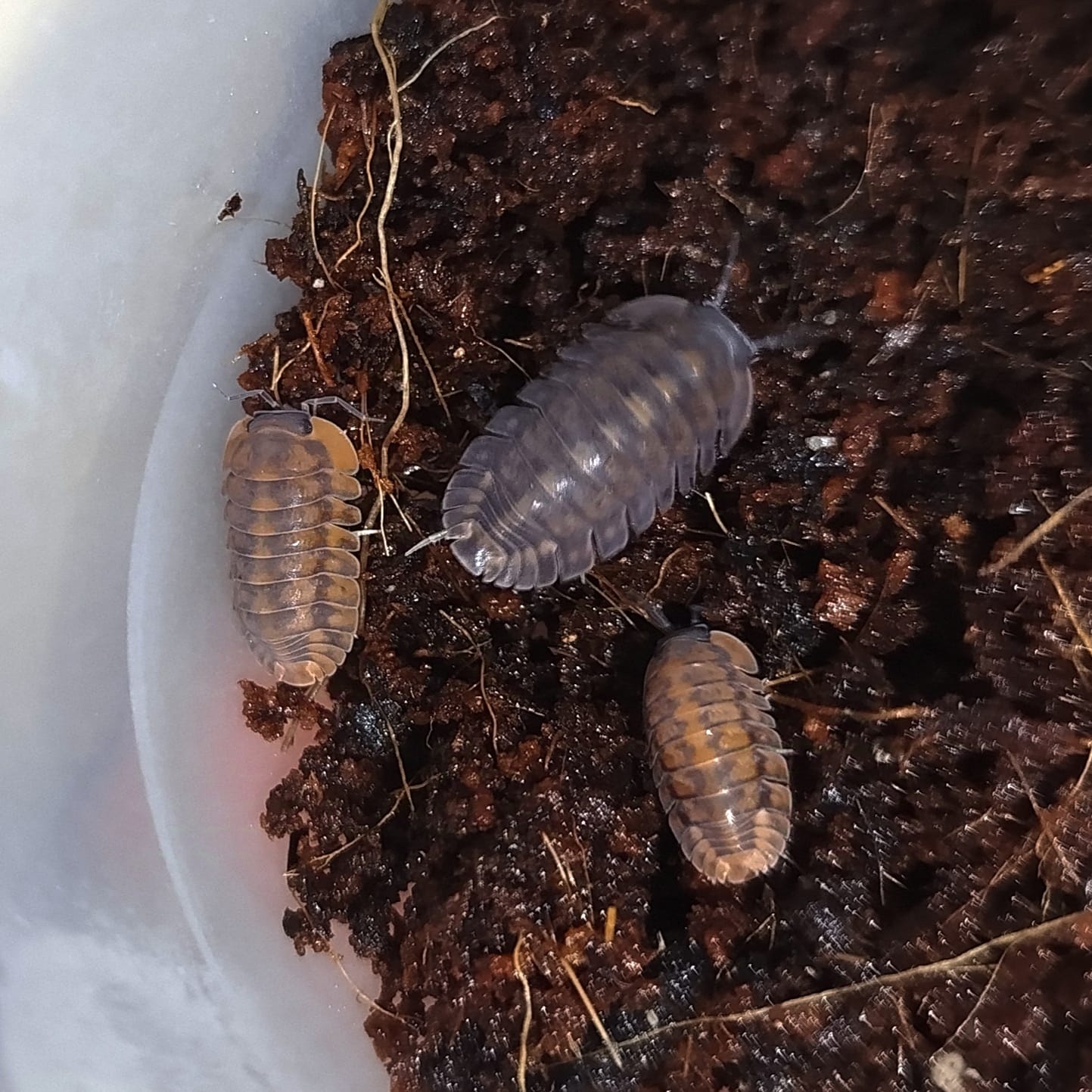
Cubaris sp. ‘Dark Phipun’
Price range: 6,00€ through 28,00€
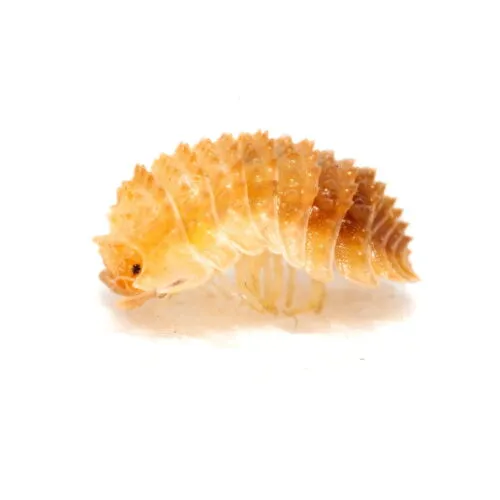
Discover the amazing Cubaris sp. ‘Dark Phipun’ 🪲, an exotic dark-colored isopod that adds elegance and life to your terrarium 🌿. Easy to care for, humidity-loving, and perfect for bioactives. A unique touch for your collection! 🌟
Technical Sheet: Cubaris sp. ‘Dark Phipun’
Common Name: Dark Phipun Isopod
Scientific Name: Cubaris sp. ‘Dark Phipun’
Family: Armadillidae
Description
The Cubaris sp. ‘Dark Phipun’ is an exotic terrestrial isopod species known for its uniform dark coloration, giving it a sleek and elegant appearance that attracts hobbyists and terrarium enthusiasts. Its segmented body and ability to roll into a ball provide effective defense against predators, adding interest to its behavior.
Natural Distribution and Habitat
Native to tropical regions of Southeast Asia, particularly humid and warm environments with abundant decomposing vegetation.
Size
- Adults: Between 1.5 and 2 cm in length.
Care Requirements
Humidity:
- 80-90%. Requires a consistently humid environment but avoid waterlogging.
Temperature:
- 22-26 °C (72-79 °F). Thrives in warm and stable climates.
Substrate:
- Coconut fiber, dried leaves, and sphagnum moss. A deep, nutrient-rich substrate is essential for its well-being.
Hiding Places:
- Include bark, logs, and stones where they can hide.
Diet:
- Decomposing organic matter, such as dry leaves, rotting wood, and fruit or vegetable scraps. It’s also recommended to supplement with isopod-specific food rich in calcium.
Reproduction
- Ovoviviparous, with young emerging as small replicas of the adults. Reproduction occurs slowly, and maintaining proper environmental conditions is key to reproductive success.
Compatibility
- Ideal for bioactive terrariums with reptiles, amphibians, and other species that do not prey on them. They can also be kept independently in isopod-only enclosures.
Fun Facts
- Their dark, uniform color makes them stand out compared to brightly colored isopods.
- They are relatively hardy if basic requirements are met, but their reproduction and development may be slower than other Cubaris species.
Warnings
- Avoid frequent handling, as they prefer peace and may become stressed easily.
- Ensure proper ventilation in their habitat to prevent mold or mite infestations.
| Options | 1 unit, 5 units |
|---|