
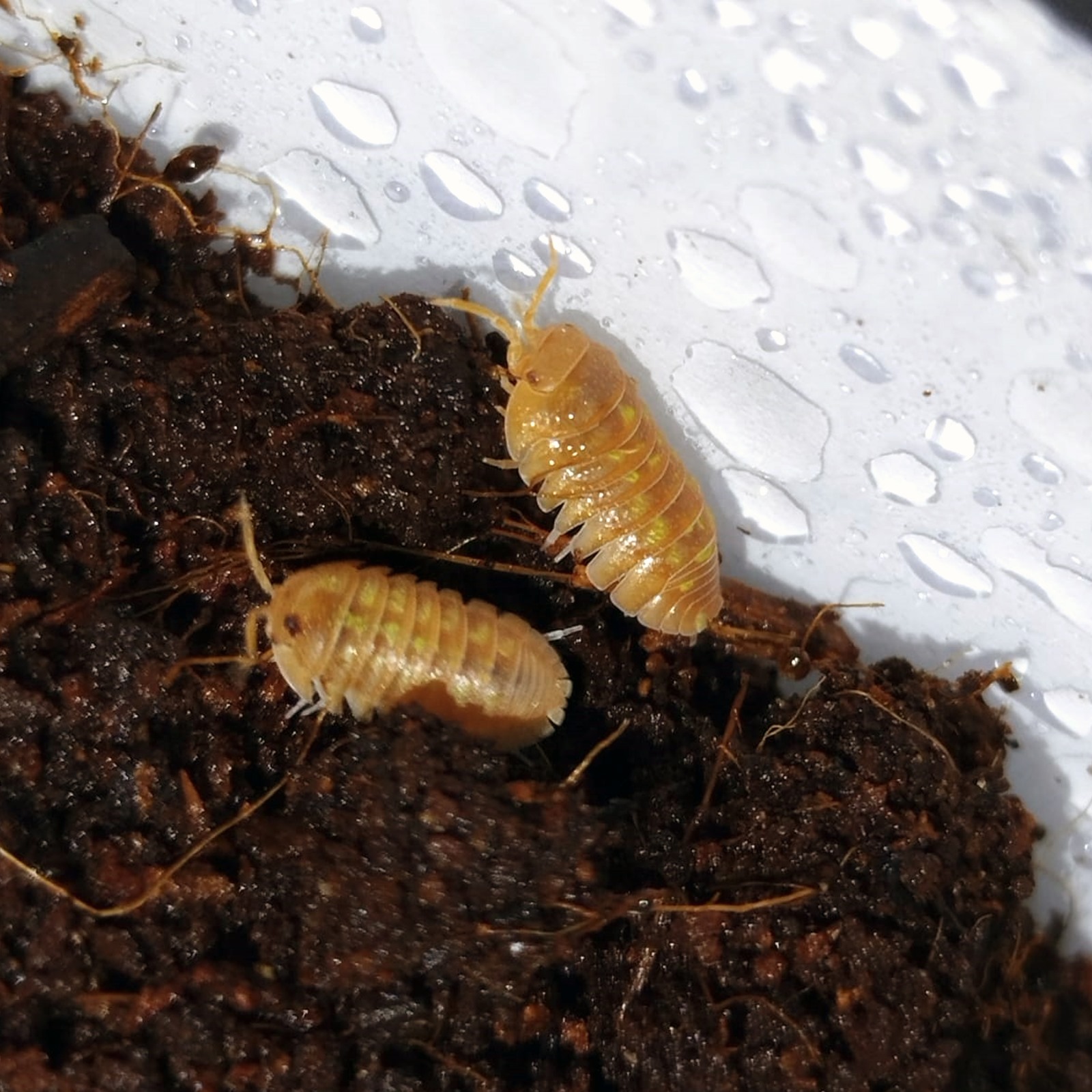
Armadillidium granulatum orange
1,50€
Discover the amazing Armadillidium granulatum Naranjito! Its vibrant orange color and hardiness make it the perfect choice for bioactive terrariums. It cleans, beautifies and fascinates! Add this unique little isopod to your collection today. Don’t miss out!
Description
Technical Sheet: Armadillidium granulatum orange
Common name: Naranjito
Scientific name: Armadillidium granulatum
Taxonomic Classification:
- Kingdom: Animalia
- Phylum: Arthropoda
- Class: Malacostraca
- Order: Isopoda
- Family: Armadillidiidae
- Genus: Armadillidium
- Species: A. granulatum
Description:
- Size: Reaches between 8 and 18 mm in length.
- Shape: Oval and convex-dorsal, with a hard segmented exoskeleton that allows it to roll into a ball when threatened (a behavior known as conglobation).
- Coloration: Armadillidium granulatum “orange” is characterized by its bright orange coloration. In adulthood, this tone can become more intense and uniform, while juvenile specimens usually exhibit duller colors.
- Pattern and texture: The exoskeleton has a rough, granulated surface, a characteristic of the species, which gives it the specific name “granulatum.”
- Antennae: Two pairs of antennae, one longer and more prominent than the other.
- Legs: It has seven pairs of legs, typical of terrestrial isopods.
Habitat:
- Distribution: Native to the Mediterranean region, mainly in southern Europe and surrounding areas, though it has also been found in other parts of the world due to human activity.
- Environment: Prefers humid habitats, such as forest floors, under stones, leaf litter, or fallen logs. It can also be found in gardens and rural areas with abundant decomposing organic matter.
- Conditions: Sensitive to drying out, they seek microclimates with high humidity. However, A. granulatum is slightly more resistant to dryness compared to other isopod species.
Behavior:
- Feeding: Detritivore. It feeds mainly on decomposing organic matter, such as leaves, dead wood, and other plant remains. It plays an important role in nutrient cycling in ecosystems by helping to break down dead material.
- Activity: Nocturnal. During the day, they usually remain hidden under natural shelters to avoid dehydration and direct sunlight.
- Defense: When threatened, they roll into a closed ball (a defensive behavior known as conglobation) to protect their soft parts and internal organs from predators.
Reproduction:
- Life cycle: Reproduction is ovoviviparous, meaning the females retain the eggs inside their bodies until they hatch. The young emerge as smaller, less developed versions of the adults.
- Offspring: After birth, the young remain in the mother’s marsupium (brood pouch) for a few days until they are self-sufficient.
- Lifespan: They have a lifespan of between 2 and 4 years, depending on environmental conditions.
Interaction with Humans:
- Use in terrariums: Armadillidium granulatum “Naranjito” is popular in the terrarium hobby due to its bright color and relative hardiness, making it a decorative species or part of the cleaning crew in bioactive setups (helping break down waste).
- Care: They prefer moist substrate with plenty of organic matter. Ideal conditions include a temperature range between 20°C and 25°C, and a relative humidity above 70%. They need shelters and access to drier areas to regulate their hydration.
Additional information
| Options | 1 unit |
|---|
Related products
Sold out
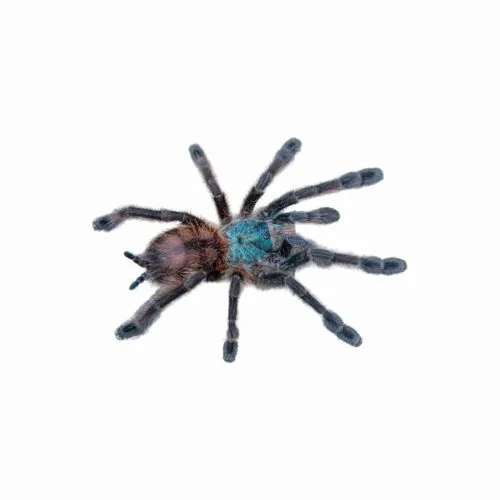
Caribena versicolor
Discover the charming Caribbean versicolor tarantula for your terrarium. With its beautiful coloration, it is a perfect addition for any spider fan. We recommend having previous experience with tarantulas or arachnids in general. Bring beauty and fascination to your space with this captivating species.
Sold out

Sold out

Sold out
Sold out


