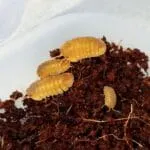
Cubaris sp. “Cappuccino”
Price range: 15,00€ through 60,00€
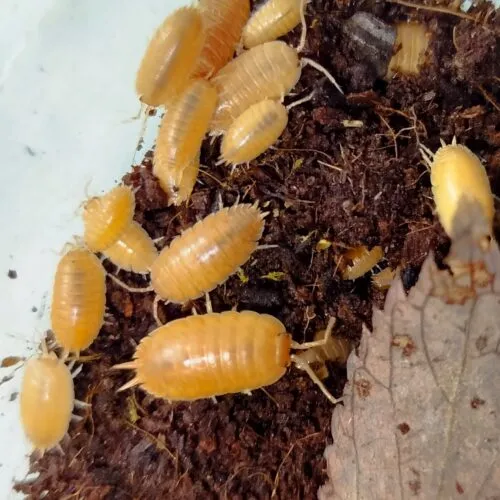
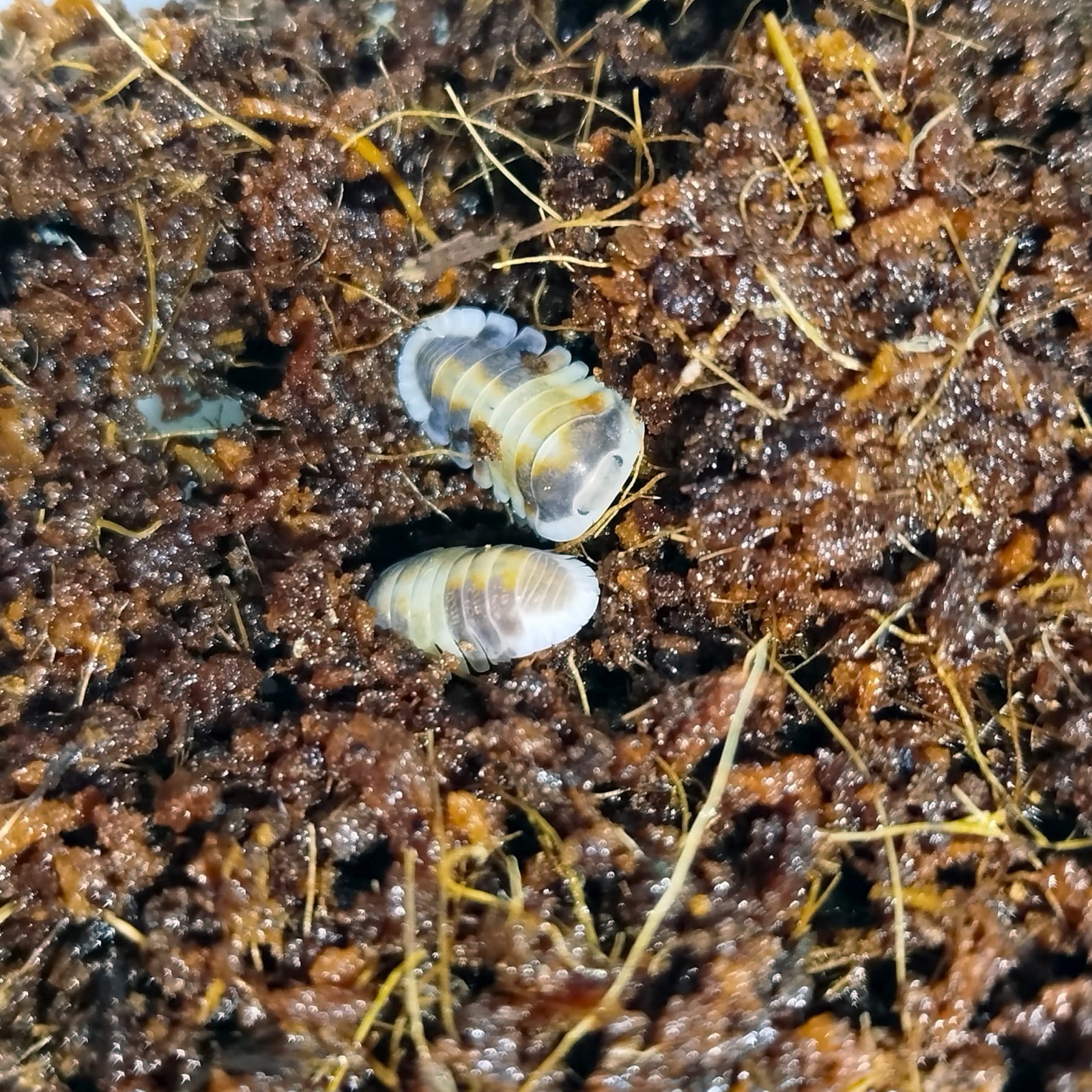
The Cubaris Cappuccino is an isopod with a unique color that resembles a coffee 😉. Perfect for bioactive terrariums, it helps keep the substrate clean while adding a special touch. Easy to care for, ideal for those who enjoy nature at home. 🌿
Technical Data Sheet: Cubaris Cappuccino
General Information
- Common Name: Cubaris Cappuccino
- Scientific Name: Cubaris sp.
- Family: Armadillidae
- Origin: Tropical regions of Southeast Asia
Description
The Cubaris Cappuccino is an exotic terrestrial isopod known for its elegant coloration in light and dark brown shades, resembling a cappuccino coffee. Its rounded shell and ability to roll into a ball make it a fascinating species, highly valued by terrarium and bioactive enclosure enthusiasts.
Size
- Adults: 1.5 to 2 cm
Behavior
- A calm species with nocturnal habits.
- Prefers humid and quiet environments.
- Tends to cluster in shelters during the day.
Optimal Conditions
- Temperature: 22-26°C (72-79°F)
- Humidity: 75-85%. Keeping the substrate moist but not soaked is crucial.
- Lighting: Indirect light, avoiding direct sunlight exposure.
- Substrate: A mix of coconut fiber, sphagnum moss, and dry leaves is ideal for recreating its natural habitat.
Diet
- Omnivorous. Feeds on decomposing organic matter (dry leaves, rotting wood) and supplements such as vegetables, fruits, and calcium-rich foods.
Reproduction
- Ovoviviparous: juveniles are born fully developed and remain in the female’s marsupium during their early stages.
- Active reproductive cycle under optimal temperature and humidity conditions.
Compatibility
- Ideal for bioactive terrariums with reptiles, amphibians, or as part of a self-sustaining ecosystem.
- Non-toxic and harmless to other species in the enclosure.
Advantages of Keeping Cubaris Cappuccino
- Helps recycle organic matter in bioactive terrariums.
- Low maintenance.
- Its exotic appearance adds a decorative touch to bioactive setups.
Important Notes
- Avoid overfeeding to prevent mold growth in the substrate.
- Provide hiding spots such as tree bark, stones, or small cavities in the terrarium.
| Options | 1 unit, 5 units |
|---|
Related products
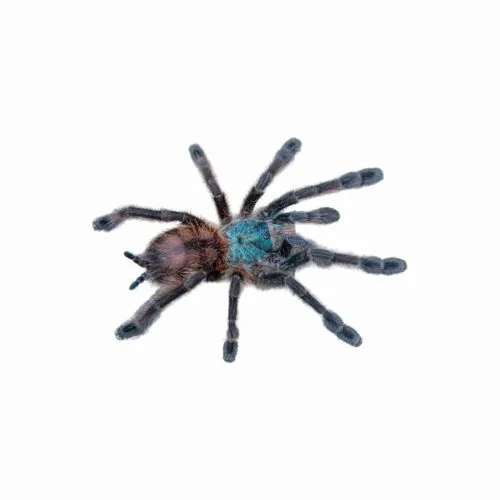
Caribena versicolor
Discover the charming Caribbean versicolor tarantula for your terrarium. With its beautiful coloration, it is a perfect addition for any spider fan. We recommend having previous experience with tarantulas or arachnids in general. Bring beauty and fascination to your space with this captivating species.