
Cubaris sp. "Cappuccino"
Price range: 15,00€ through 60,00€
Cubaris murina "glacier"
2,50€
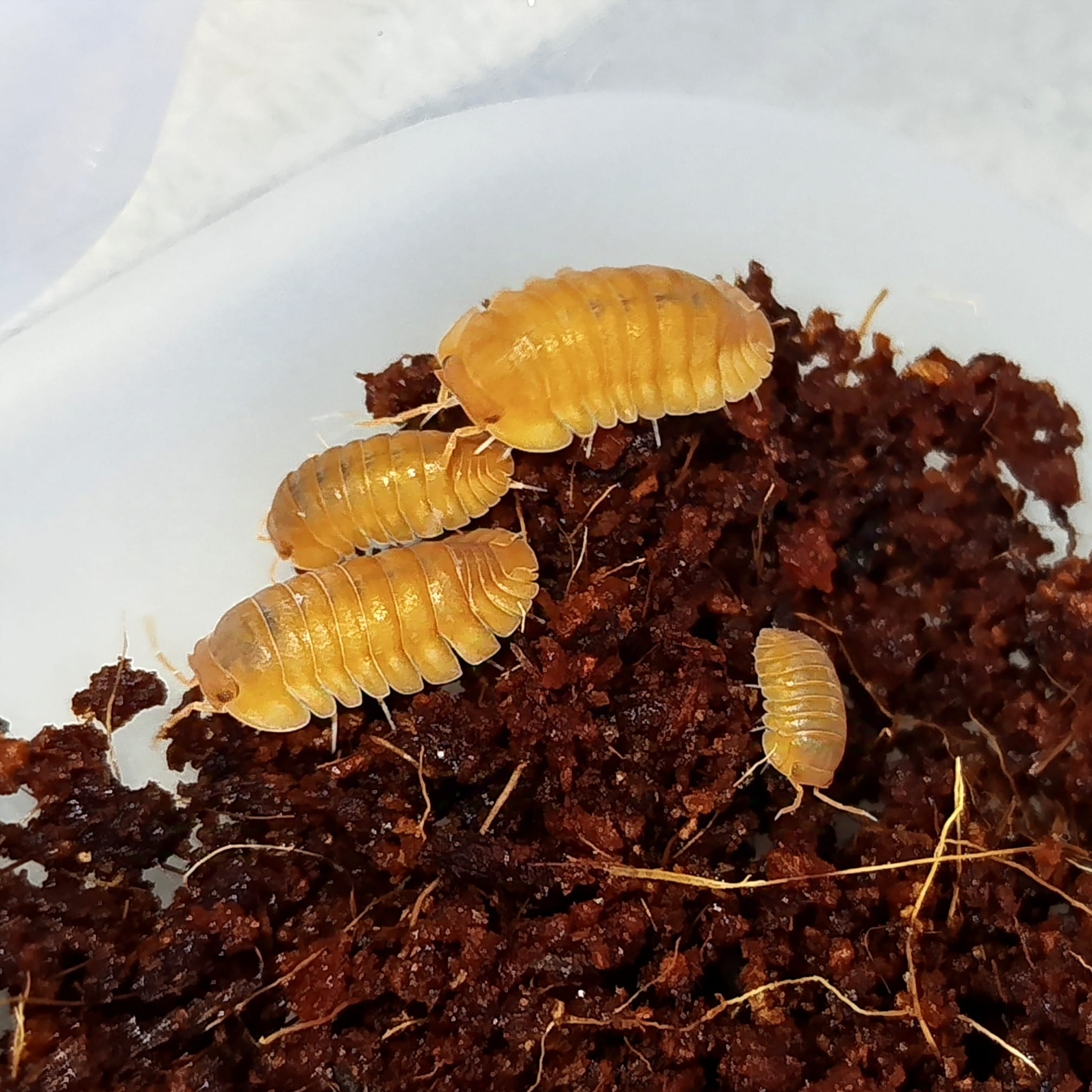
Cubaris sp. “Red Edge Orange”
Price range: 4,00€ through 35,00€
Add a unique touch to your terrarium with the Cubaris sp. “Red Edge Orange”. This isopod stands out with its red-orange edges and easy care. Perfect for maintaining humidity and decorating with style. An ideal bioactive ally for any tropical setup! 🌿🐾
Description
Technical Sheet of Isopod Cubaris sp. “Red Edge Orange”
Main Features:
- Scientific Name: Cubaris sp. “Red Edge Orange”
- Common Name: Red Edge Orange Isopod
- Origin: Tropical Asia (likely Southeast Asia regions).
- Adult Size: Between 1.2 cm and 2 cm.
- Coloration: Light gray or brown base with intense red and orange edges on the exoskeleton, creating a striking visual contrast.
Maintenance Conditions:
- Humidity: High (70-90%). Keep the substrate slightly moist, avoiding waterlogging.
- Temperature: 22-28 °C. Sensitive to temperatures below 20 °C.
- Ventilation: Moderate. A lid with small holes is recommended to prevent mold buildup.
- Lighting: Indirect light. They prefer dark or low-light environments.
Habitat:
- Substrate: A mix of coconut fiber, leaf litter, and sphagnum moss for moisture retention.
- Decoration: Add logs, bark, and dried leaves as shelters and cellulose sources.
- Moist Zone: It’s ideal to include a moister area in the terrarium for them to rest.
Feeding:
- Diet: Omnivore. Feeds on decaying organic matter, dried leaves, decomposed wood, and occasionally fruits and vegetables (carrot, pumpkin, zucchini).
- Supplement: Add calcium (crushed cuttlebone) to strengthen their exoskeletons.
Reproduction:
- Type: Ovoviviparous. The offspring are born directly from the female’s marsupium.
- Cycle: Reproduction is constant under good conditions, with litters of 10-30 offspring.
Advantages and Curiosities:
- Visual Appeal: Its unique coloration makes it a highly valued species in decorative terrariums and as an ornamental isopod.
- Care: Although it requires specific conditions, it is relatively easy to care for once established.
- Behavior: Active at night and shy during the day, it tends to hide under shelters.
Additional Recommendations:
- Keep in groups to reduce stress.
- Avoid excessive handling, as they are sensitive to drastic temperature and humidity changes.
Note: Cubaris sp. “Red Edge Orange” is ideal for bioactive terrariums and provides benefits to the terrarium ecosystem by decomposing organic matter.
Additional information
| Options | 1 unit, 10 units |
|---|
Related products
Sold out

Sold out
Sold out
Sold out
Sold out


